Buying a water treatment system can feel a little like buying something for a problem you can’t quite see.
You may know there’s white scale around the faucets. Maybe the water tastes odd, or your coffee maker seems to need descaling far too often. Perhaps you rely on a private well and simply want to understand what’s coming out of the tap.
The natural reaction is to start looking at filters and softeners.
But there’s a better first step: find out what’s actually in the water.
A treatment system should solve a specific problem, not simply add equipment to your utility room. Testing provides the information needed to make that decision with more confidence. It can also prevent the common mistake of buying a system that sounds impressive but isn’t designed for your home’s actual conditions.
In water treatment, a little information upfront can save a lot of frustration later.
Why Guessing Can Get Expensive
Water can contain characteristics that aren’t obvious from appearance alone.
Clear water can still have elevated hardness or dissolved substances. Likewise, cloudy water isn’t automatically dangerous; it could be caused by harmless air bubbles or suspended particles.
Taste and smell can offer clues, but they aren’t reliable diagnostic tools.
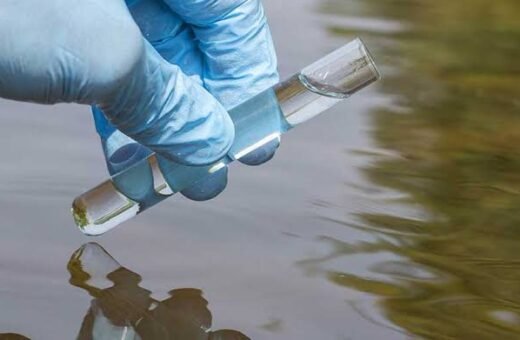
That’s why a professional water test can be valuable when you’re considering treatment. Depending on the situation, testing may evaluate hardness, pH, total dissolved solids, minerals, metals, microorganisms or other specific concerns.
The exact test should match your water source and what you’re trying to understand.
Your Water Source Changes the Conversation
A municipal water customer and a private well owner aren’t starting from the same place.
Public water systems generally treat and monitor their supplies according to applicable requirements, while private well owners have much more direct responsibility for testing and understanding their water.
Well water can vary considerably from property to property. Even neighboring homes may have different conditions underground.
That doesn’t mean well water is automatically problematic. It simply means you need information specific to your well.
Municipal water can also have characteristics worth addressing, especially when homeowners notice changes in taste, odor or appearance.
Hardness Is a Common Finding
One of the most familiar water-quality concerns is hardness.
Hard water contains dissolved minerals, primarily calcium and magnesium. It can leave white spots on glass, deposits around faucets and scale inside fixtures and appliances.
If the test confirms significant hardness, a water softener may be appropriate.
But don’t assume that hardness is responsible for every water problem.
An unpleasant odor, metallic taste or sediment may have a different cause. Treating hardness won’t necessarily address those concerns.
This is exactly why testing matters. It helps separate one issue from another.
The Right Equipment Depends on the Results
Once you know what’s present, equipment selection becomes much more logical.
A sediment filter can be useful for suspended particles. Carbon filtration is commonly used for certain taste and odor concerns. Water softeners are designed primarily for hardness.
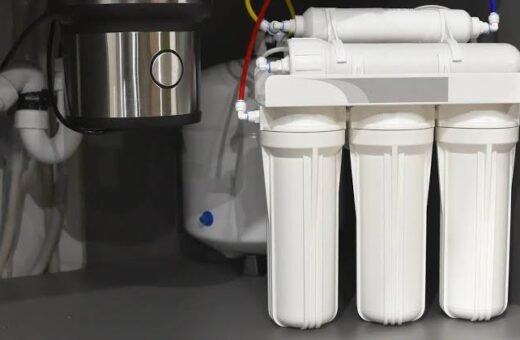
Reverse osmosis systems can provide a higher level of treatment for many dissolved substances, particularly in drinking-water applications.
None of these technologies is universally “best.”
The best choice is the one that addresses your actual water conditions.
Size Matters More Than You Might Expect
Even the right technology can underperform if the system is too small for the household.
Imagine a family of six using several showers, appliances and faucets throughout the morning. A treatment system designed for much lower demand may struggle to keep up.
Flow rate, pressure and household consumption should therefore be considered during system selection.
A professional installer can help determine the appropriate system size based on water use and equipment specifications.
Oversizing isn’t necessarily ideal either. Larger equipment can cost more and may require additional space or maintenance.
Good sizing is about balance.
Water Pressure Can Change the Experience
Water treatment systems can affect flow, particularly when filters become clogged or when equipment introduces additional resistance.
If your home’s water pressure is already low, you’ll want to know that before installation.
A system that technically treats the water but leaves everyone complaining about a weak shower isn’t exactly a success.
Pressure should be evaluated alongside flow rate and treatment requirements.
This is another area where professional installation can be helpful. The goal isn’t simply to connect equipment; it’s to make sure the entire setup works comfortably within the home’s plumbing conditions.
Whole-Home Treatment Isn’t Always Necessary
Another common misconception is that every water-quality issue requires a whole-home system.
Not necessarily.
If the main concern is drinking-water taste, a point-of-use filter or reverse osmosis system may be enough. If hard water is affecting showers, laundry and appliances, whole-home softening may make more sense.
The treatment location should follow the problem.
There’s no reason to spend more money treating water for outdoor irrigation if your concern is simply the water coming from the kitchen faucet.
Start with your priorities.
Maintenance Should Be Considered Before Installation
Every treatment system requires some form of upkeep.
Filters need replacement. Softener systems may need salt. RO membranes eventually require service. UV systems require lamp replacement according to manufacturer recommendations.
These aren’t flaws. They’re simply part of owning treatment equipment.
Before making a purchase, ask how often maintenance is required and what replacement components cost.
A system that fits your budget initially may become inconvenient if its long-term maintenance is expensive or difficult to manage.
Think beyond installation day.
Testing Can Also Help You Track Changes
Water testing isn’t necessarily a one-time activity.
For private wells especially, periodic testing can help identify changes over time. A well’s water characteristics may shift due to environmental conditions, seasonal changes or other factors.
If your household suddenly notices an unusual taste or odor, testing can provide a useful comparison with earlier results.
For municipal users, changes may also be worth investigating if they’re persistent rather than temporary.
Water has a way of telling you when something is different—sometimes quietly.
Don’t Let Marketing Make the Decision
Water-treatment advertising can be persuasive.
You’ll see phrases like “maximum protection,” “advanced purification” and “ultimate filtration.” Those descriptions may sound reassuring, but they don’t tell you whether the equipment is right for your water.
Look at the technology.
What does it remove? What doesn’t it remove? What flow rate can it handle? How often does it need maintenance? What happens if a filter isn’t changed on time?
Good questions are more useful than impressive adjectives.
Installation Quality Matters
Once you’ve chosen a system, installation is the next important step.
Improper connections, inadequate drainage, poor placement or incorrect settings can create problems that have nothing to do with the treatment technology itself.
The equipment should be installed where routine maintenance is practical and components can be accessed without major hassle.
A professional can also explain how the system operates and what to watch for after installation.
That’s useful information to have before something goes wrong.
Look at the Whole Cost
The purchase price is only one part of the equation.
Consider installation, filter replacements, salt or other consumables, electricity where applicable, service visits and eventual component replacement.
Then compare those costs with the problem you’re trying to solve.
If you’re spending hundreds of dollars every year on bottled water, frequent appliance maintenance or cleaning products for persistent scale, treatment may have a stronger financial case.
If the issue is minor, a simpler solution may be enough.
There’s no need to make the decision bigger than it needs to be.
Give the System a Fair Chance
Once installed, a treatment system should be monitored during its early operation.
Check for leaks. Pay attention to pressure. Notice changes in taste or appearance. Make sure settings are appropriate and that the equipment is maintained according to the manufacturer’s recommendations.
The objective is optimal performance, not simply having a new piece of equipment sitting in the basement.
If something doesn’t seem right, address it early.
Small adjustments are usually easier than waiting until a problem becomes obvious.
Better Decisions Begin With Better Information
Water treatment doesn’t have to be mysterious.
You don’t need to understand every technical term or own every type of filtration technology. You just need to know enough about your water to make a sensible choice.
Test first. Understand the results. Identify the actual problem. Consider household demand, pressure, installation and maintenance. Then choose equipment that fits those needs.
That approach may lead to a sophisticated system, or it may lead to something surprisingly simple.
Either outcome is perfectly fine.
The goal isn’t to buy the most equipment. It’s to get the right equipment.
When the treatment technology matches the water, the system is properly sized and maintenance is kept on schedule, good water quality becomes wonderfully uneventful.
And honestly, that’s probably what most homeowners want: turn on the faucet, fill a glass and move on with the day.