Living with a private well has a certain appeal. There’s a feeling of independence in knowing that your home’s water comes from beneath your own property rather than traveling through a municipal distribution network. But that independence comes with a small catch: you have to pay attention to what your well is actually delivering.
Most of the time, that means noticing the little things.
Maybe the water leaves orange marks in the sink. Perhaps soap never seems to rinse quite right. A glass might have a faint metallic taste, or the shower door develops a white film only days after you’ve cleaned it.
These aren’t necessarily signs of a serious problem. They’re clues.
The smartest way to deal with well-water concerns is to understand the source, test the water, and select treatment around the actual conditions. A little knowledge at the beginning can prevent a lot of wasted money later.
Start by Paying Attention to Everyday Clues
Your home can tell you quite a bit about its water.
White crust around faucets often points toward hardness. Orange or reddish stains may indicate iron. A sulfur-like odor can be associated with hydrogen sulfide. Sand or particles in a glass may suggest sediment.
Of course, none of these observations provides a complete diagnosis.
That’s why it helps to look at them as starting points rather than conclusions. If something has changed, note when it happens, which fixtures are affected, and whether the problem appears in hot water, cold water, or both.
Those details can make troubleshooting much easier.
What Well Water Filtration Can Actually Do
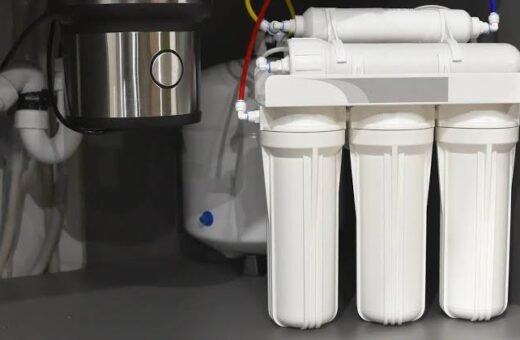
Well water filtration isn’t one specific piece of equipment. It’s a broad term covering several treatment approaches designed to reduce particular substances from the water.
A sediment filter can capture suspended particles. Activated carbon may help reduce certain tastes and odors. Specialized filtration media can target iron, sulfur compounds, or other water-quality concerns.
The important thing is matching the filter to the problem.
A cartridge designed for sediment isn’t necessarily going to solve a sulfur odor. A carbon filter may improve taste but won’t automatically address significant hardness.
In other words, don’t buy the filter first and figure out the problem afterward.
Hard Water Is a Different Kind of Concern
Hardness comes primarily from calcium and magnesium dissolved in groundwater.
It’s not always noticeable when you drink the water. Instead, it tends to reveal itself through everyday household chores.
Soap may lather poorly. Glassware can develop spots. Faucets collect mineral deposits. Shower surfaces become difficult to keep clean.
Over time, scale can also develop inside water heaters and other equipment.
This is where water softening may be appropriate. Unlike a basic filter, a conventional water softener is specifically designed to reduce hardness minerals through ion exchange.
If hardness is the main issue affecting the entire home, treating water at the point where it enters the property can be much more practical than trying to deal with deposits one fixture at a time.
Not Every Home Needs a Softener
It’s worth making that distinction because water softeners are sometimes recommended as though every household needs one.
They don’t.
If your water has relatively low hardness and your only concern is an unpleasant drinking-water taste, a softener may be unnecessary.
Likewise, a softener isn’t a universal purification system. It has a specific job.
The right treatment depends on what your water test shows and what you actually want to accomplish.
Testing Turns a Hunch Into Useful Information
It’s easy to look at an orange stain and assume iron. Or smell something unusual and assume sulfur.
Sometimes you’re right.
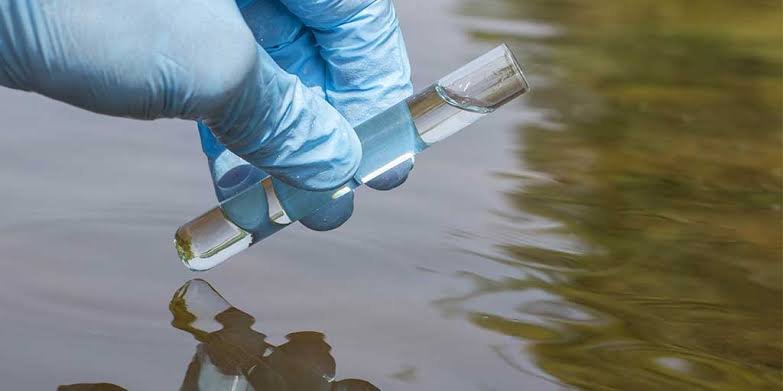
But water testing is a better way to confirm what’s happening before investing in treatment equipment.
Depending on the situation, testing can evaluate hardness, pH, iron, sulfur-related compounds, bacteria, and other characteristics.
For private wells, testing is particularly useful because groundwater isn’t necessarily static. Seasonal conditions, heavy rainfall, changes around the property, and other factors can influence the supply.
A baseline test gives you something to compare against if the water changes later.
Iron Can Be Sneaky
Iron is one of the more common well-water complaints.
In some cases, water looks clear when it first comes from the tap but leaves orange stains after exposure to air. In other situations, iron may already appear as visible particles.
Different forms of iron require different treatment strategies.
That means buying a generic “iron filter” without knowing the concentration or form of iron can be a bit of a gamble.
Testing first gives you a much better chance of choosing equipment that will actually work.
Sulfur Odor Is Hard to Ignore
A rotten-egg smell is probably one of the fastest ways to make someone question their water.
Hydrogen sulfide is often responsible, particularly in some private well supplies.
The odor can appear in cold water, hot water, or both. If it’s limited to hot water, the water heater may deserve attention as well.
Treatment options can include aeration, oxidation, filtration, or combinations of these methods.
Again, the water chemistry matters. One treatment approach isn’t automatically suitable for every sulfur problem.
Sediment Can Affect the Whole System
Sediment may consist of sand, silt, rust particles, or other suspended material.
You might notice it after heavy rain or a change in groundwater conditions. It can also enter the system because of well or plumbing issues.
A properly selected sediment filter can capture particles before they reach faucets and other treatment equipment.
But there is a maintenance trade-off.
As sediment accumulates inside the filter, water flow can decrease. If pressure suddenly drops, checking the filter is one of the simplest things to do before calling for major repairs.
Point-of-Use or Whole-Home Treatment?
Where you treat the water matters.
If your main complaint is drinking-water taste, a kitchen-based filter may be perfectly adequate. There’s no reason to treat water used for toilets or outdoor irrigation if your concern is limited to what you drink.
But if hardness, iron, or sediment is affecting multiple fixtures, whole-home treatment may make more sense.
Think about where the problem shows up.
If the answer is “pretty much everywhere,” treating the water before it travels through the home’s plumbing can be a more logical approach.
Your Well Needs Care, Too
It’s easy to focus entirely on filtration equipment and forget about the well itself.
The well cap, casing, pump, pressure tank, and surrounding area all matter. The area around the well should be protected from obvious sources of contamination and surface-water intrusion.
After flooding or major environmental changes near the property, additional testing may be appropriate.
A treatment system is not a substitute for maintaining the source.
If there’s a problem with the well itself, that issue needs to be addressed directly.
Don’t Overlook Flow Rate
Treatment equipment needs to keep up with household demand.
Picture a typical morning: someone is showering, another person starts the washing machine, and the dishwasher is filling. A system that is undersized may struggle during these peak periods.
When choosing equipment, consider household size, plumbing configuration, incoming pressure, and expected flow requirements.
The biggest system isn’t automatically the best one.
Proper sizing is.
Maintenance Makes the Difference
Even excellent equipment needs routine care.
Filters need replacement. Softener systems require salt or other maintenance depending on the design. Treatment media may eventually need servicing or replacement.
Keep a record of when components are installed and changed.
It’s an incredibly simple habit, but it prevents the classic homeowner problem of staring at a filter and wondering, “When did I replace this thing?”
Don’t Let Marketing Choose Your System
Water treatment advertisements can make complicated equipment sound irresistible.
Instead of focusing on phrases like “advanced purification” or “maximum protection,” ask more practical questions.
What does the equipment actually reduce? Is it designed for your specific water chemistry? What are the replacement costs? How often does it require service? Can you easily get replacement parts?
If a company recommends equipment, ask them to explain why that particular setup fits your test results.
A good explanation is worth more than a long list of impressive-sounding features.
Better Water Comes From the Right Match
There isn’t one perfect treatment system for every well.
One household may need sediment filtration. Another may need a softener. Someone else may primarily need iron or sulfur treatment, while a kitchen faucet may benefit from reverse osmosis.
The common thread is understanding the water first.
Pay attention to changes, test when appropriate, maintain the well, and choose equipment based on actual needs rather than assumptions.
The goal isn’t to build the most sophisticated water-treatment setup possible.
It’s to create a system that quietly does its job.
When you’ve got that balance right, the orange stains fade, the shower feels better, the glassware stays cleaner, and the water becomes something you can simply use without thinking twice.
And honestly, that’s a pretty good definition of success.