Water is easy to take for granted. It arrives when you turn the faucet, fills a glass in seconds, and disappears down the drain without much thought. But when you’re managing a home, office, restaurant, warehouse, or industrial facility, water quality can become a much bigger part of everyday life.
Maybe employees complain about the taste. Perhaps mineral deposits keep appearing around fixtures. In a larger facility, untreated water can create scale inside equipment and increase maintenance work. Suddenly, something as ordinary as water starts affecting time, money, and convenience.
The answer isn’t always a complicated treatment setup. In many cases, the best approach is simply understanding the water and matching the treatment to the problem.
Start by Understanding the Water
Before choosing equipment, consider where the water comes from and what’s happening inside the property.
Municipal supplies are typically treated before distribution, while private wells can have very different characteristics depending on local geology and groundwater conditions. Commercial facilities may also have specialized water requirements based on their equipment or processes.
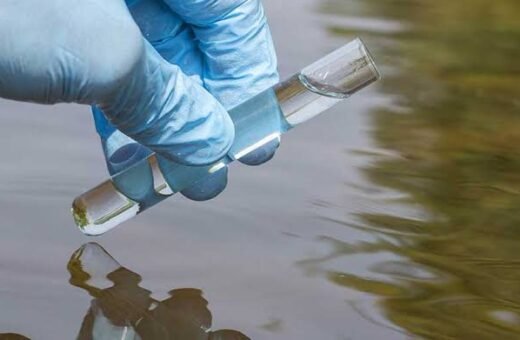
Testing can reveal information that isn’t obvious from appearance alone. Hardness, iron, manganese, chlorine, pH, sediment, dissolved substances, and other characteristics can influence which treatment technologies make sense.
That first step matters. You don’t want to spend money treating a problem that isn’t actually there.
Why Bottle-Free Water Coolers Are Appealing
In offices and other shared spaces, drinking water often comes with a familiar routine: someone orders bottled water, deliveries arrive, empty containers pile up, and eventually somebody has to deal with them.
Bottle-free water coolers offer another approach.
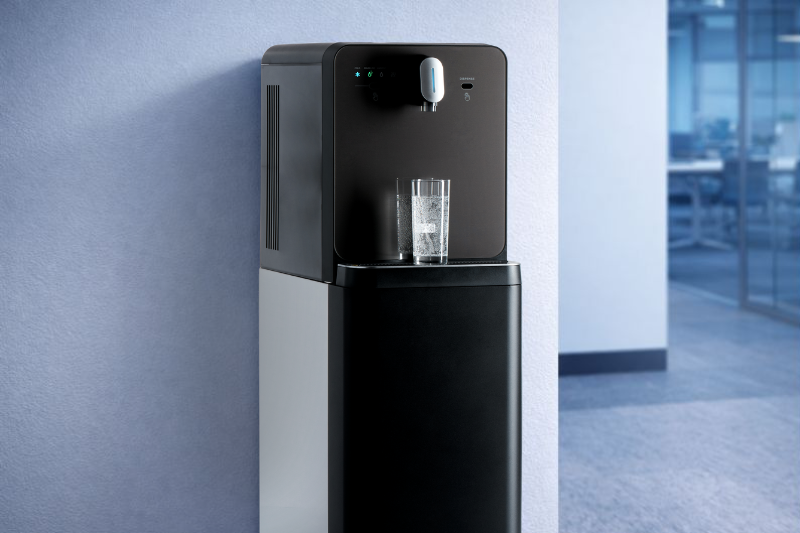
These systems connect directly to a water supply and use filtration or other treatment methods to provide drinking water on demand. There’s no need to store cases of bottles or schedule regular deliveries.
For a busy workplace, the convenience can be significant. Employees can refill reusable bottles, visitors have access to drinking water, and the space needed for bottled-water storage can be reduced.
Of course, the filtration technology still matters. A bottle-free cooler should be selected according to the incoming water and the desired drinking-water quality.
Taste Is Often What Gets People Interested
Most people don’t start researching water treatment because they love water chemistry.
They notice something they don’t like.
Maybe the water tastes strongly of chlorine. Maybe it has a metallic flavor. Perhaps coffee brewed with tap water just doesn’t taste right.
Taste and odor can be affected by several factors, including disinfectants, minerals, organic compounds, and plumbing conditions.
Carbon filtration is commonly used to improve certain taste and odor issues, particularly those associated with chlorine.
But taste isn’t a complete test of safety. Pleasant-tasting water isn’t automatically free from every contaminant, just as unpleasant-tasting water isn’t necessarily dangerous.
Testing helps separate the two questions.
Commercial Water Has Different Demands
A small office and a manufacturing facility can both need drinking water, but that’s where the similarities may end.
A commercial kitchen may care about water quality because it affects beverages, food preparation, and equipment. A hotel may need consistent water across hundreds of rooms. An industrial facility may use water as part of a manufacturing process.
This is where commercial/industrial water treatment becomes more specialized.
Systems may be designed to manage hardness, scale, sediment, corrosion, dissolved minerals, or other water characteristics that interfere with operations.
The treatment strategy should be built around the actual application. Water used in a production process may have requirements that are completely different from water intended for drinking.
Hard Water Can Create Expensive Problems
Hard water isn’t usually something people think about until they see the evidence.
White scale on faucets is one clue. Deposits inside a water heater are another. Showerheads can clog. Dishwashers and coffee equipment may also accumulate mineral buildup.
In a commercial environment, the cost can be more serious because equipment operates frequently.
Softening can reduce hardness by removing calcium and magnesium ions from the water. Whether it’s appropriate depends on the water chemistry and the property’s needs.
The important thing is to address the cause rather than constantly cleaning the symptoms.
Water Heaters Need Attention Too
Few household appliances have a tougher working life than water heaters.
They deal with heated water, mineral deposits, temperature changes, and regular demand every day.
When hard water is present, scale can accumulate inside heating equipment. Over time, deposits may interfere with heat transfer and contribute to reduced efficiency or increased maintenance.
Water treatment isn’t a substitute for proper water-heater maintenance, but reducing problematic hardness can be part of a broader strategy for protecting equipment.
For commercial facilities, this becomes even more important because water-heating systems may operate continuously or serve large numbers of people.
Not Every Filter Does the Same Thing
“Water filter” is a broad term.
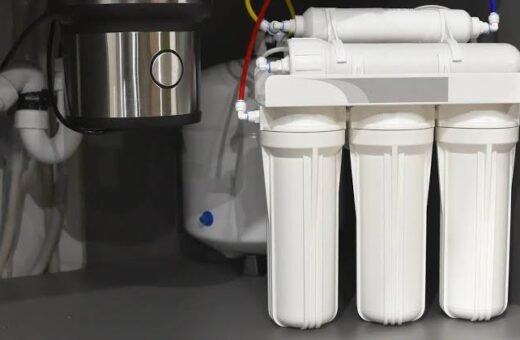
A sediment filter can capture particles. Carbon can reduce certain taste and odor compounds. Reverse osmosis can reduce many dissolved substances. Ultraviolet treatment is intended for disinfection.
These technologies aren’t interchangeable.
If someone recommends a filter, ask what it is designed to remove or reduce.
That simple question can prevent a lot of confusion.
It also helps you compare systems based on performance rather than marketing language.
Whole-Property Treatment May Be More Practical
If water problems affect several fixtures, treating a single drinking-water tap may not be enough.
Whole-house or facility-wide treatment can address water before it travels through the property’s plumbing.
This can be useful when hardness, sediment, iron, or other characteristics affect showers, laundry equipment, appliances, and commercial fixtures.
The system needs to be sized properly, though. Water demand varies significantly between properties.
A treatment system should be capable of handling peak flow without unnecessarily increasing equipment and operating costs.
Maintenance Is Easy to Forget
Water treatment equipment tends to be quiet.
That sounds like a good thing—and it is—until you realize how easy it is to forget about maintenance.
Filters need replacement. Softening systems may require salt. Reverse osmosis membranes eventually wear out. Other treatment equipment may require cleaning, inspection, or media replacement.
Businesses should keep maintenance records and establish a regular service schedule.
Homeowners can use calendar reminders for filter changes.
It’s a small habit that can make a surprisingly big difference in long-term performance.
Installation Should Be Done With the Future in Mind
A treatment system needs more than a place to sit.
Installers have to consider water pressure, plumbing configuration, drainage, electrical requirements, access, and available space.
Maintenance access is particularly important.
If a filter housing is buried behind other equipment, changing a cartridge becomes an unnecessary headache. In a commercial setting, poor access can also increase downtime.
A thoughtful installation considers how the system will be serviced months and years after the installation crew has left.
Don’t Focus Only on the Purchase Price
A low initial price can look attractive.
But water treatment has ongoing costs.
Replacement filters, membranes, salt, electricity, service calls, and other consumables all contribute to the total cost of ownership.
When comparing systems, ask about these expenses upfront.
A slightly more expensive system with accessible replacement parts and straightforward maintenance may prove more practical than a cheaper system that becomes difficult to service.
And don’t assume that the most expensive option is the best.
The right system is the one that does the job without unnecessary complexity.
Choose Based on the Actual Need
Good water treatment starts with a simple principle: solve the real problem.
If employees want better-tasting drinking water, a properly filtered bottle-free cooler may be enough.
If a home has widespread scale, softening may make more sense.
If an industrial process is sensitive to specific minerals or contaminants, the treatment plan needs to be designed around those requirements.
There isn’t a universal answer, and that’s perfectly fine.
Better Water Should Make Life Easier
The purpose of water treatment isn’t to fill a mechanical room with impressive-looking equipment.
It’s to make water work better for the people and systems that depend on it.
In a home, that might mean cleaner fixtures and better-tasting drinking water. In an office, it could mean convenient access to filtered water without stacks of bottles. In an industrial facility, it may mean protecting equipment and maintaining consistent process conditions.
Start with testing. Understand the water. Define the goal. Then choose treatment that fits.
When everything is working properly, water treatment becomes almost invisible.
That’s a good thing.
You shouldn’t have to think about the system every time you take a drink or turn on a faucet. It should simply do its job in the background, quietly making everyday water more useful, dependable, and easier to live with.