Water treatment can seem complicated from the outside. Walk into any showroom or start browsing online and you’re quickly surrounded by technical terms, different filter types, capacity ratings, replacement schedules, and claims about cleaner or better water.
It’s enough to make a person wonder whether choosing a filter should really be this difficult.
Usually, it doesn’t have to be.
The smartest place to start isn’t with a product. It’s with a question: What do you actually want to improve about your water? Maybe the issue is taste. Perhaps you’re concerned about certain dissolved substances, or maybe you simply want an easier alternative to buying drinking water every week.
Once the goal is clear, the choices become much easier to understand.
Start With the Water, Not the Equipment
Every property has its own water story.
Municipal water and private well water can have very different characteristics. Even homes connected to the same public supply can experience differences caused by plumbing, building age, fixtures, and other factors.
That’s why testing can be so useful before purchasing treatment equipment.
A test can help identify characteristics such as hardness, pH, iron, chlorine-related concerns, and other parameters depending on the test being performed. You don’t necessarily need to become a water-quality expert. You just need enough information to avoid making a blind purchase.
After all, buying treatment equipment without understanding the problem is a little like taking medicine without knowing what you’re treating.
Understand What Each Technology Is Designed to Do
Different treatment technologies have different jobs.
Activated carbon is commonly used to reduce certain tastes and odors and can address chlorine and some organic compounds, depending on the filter design.
Water softeners are primarily designed to reduce hardness.
UV systems are used for microbial treatment under appropriate conditions.
Reverse osmosis is designed to reduce many dissolved substances through a semipermeable membrane.
The differences matter because “filtered” isn’t a single technical category.
For households dealing with several concerns, combining technologies can sometimes make sense. But there’s no reason to stack systems simply because more equipment sounds better.
When Reverse Osmosis Makes Sense
For drinking water, reverse osmosis systems are often considered when homeowners want substantial reduction of many dissolved substances.
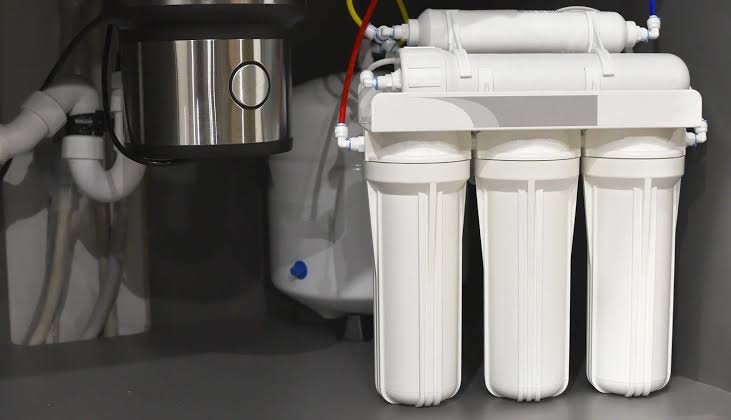
The process uses pressure to push water through a semipermeable membrane, separating much of the dissolved material from the treated water. Many systems also use pre-filters and post-filters to support membrane performance and improve taste.
That doesn’t make reverse osmosis a universal solution.
These systems have specific installation and maintenance requirements. They can also produce a wastewater stream, and filter and membrane replacement is part of ownership.
If you’re considering RO, ask what the system is designed to reduce and whether your incoming water conditions are appropriate for the equipment.
Under-Sink Filtration Keeps Things Focused
Not every household needs whole-home treatment.
If your main concern is drinking and cooking water, a kitchen-based system can be a practical choice. It treats water where you use it instead of processing every gallon entering the property.
Under-sink filtration units are particularly useful for households that want a dedicated source of treated water without taking up much counter space.
The actual performance depends on the filter technology and cartridge design, so look beyond the product name. Check what contaminants or water characteristics the filter is designed to address, how long the cartridge typically lasts, and what the replacement process involves.
A filter hidden under the sink is convenient until you forget it exists.
Set a reminder for replacements.
Whole-Home Filtration Has a Different Purpose
Whole-home systems are designed to treat water before it reaches multiple fixtures.
That can make sense when the concern affects showers, laundry, bathrooms, and appliances as well as drinking water.
For example, if you’re primarily dealing with sediment throughout the plumbing system, point-of-use filtration won’t address water coming from every faucet.
Likewise, if hardness is causing buildup across the house, you’ll need a treatment approach designed for the entire water supply rather than only the kitchen.
Think about where the problem actually appears.
Offices Have Different Drinking-Water Needs
A home and a workplace don’t always consume water in the same way.
An office may have dozens of employees filling bottles throughout the day. Waiting rooms, schools, gyms, retail spaces, and other commercial environments can have similarly high demand.
That’s where bottleless water coolers and dispensers can be worth considering. Rather than relying on delivered water bottles, these systems connect to a water supply and use filtration or treatment appropriate to the model.
The practical benefit is convenience, but there are other considerations too. Placement, plumbing, filter replacement, sanitation, and expected daily demand all deserve attention.
A dispenser that is constantly being used needs a maintenance plan behind it.
Taste Can Be the Difference Between Using and Avoiding Tap Water
Water quality isn’t just a technical subject.
Taste matters.
If the water tastes unpleasant, people often drink less of it. A family may buy bottled beverages more frequently, while employees might avoid the office dispenser altogether.
A filtration system can sometimes improve taste by reducing substances responsible for unwanted flavors or odors.
But don’t assume that taste alone tells you whether water is safe.
Pleasant-tasting water isn’t automatically safe, and unpleasant-tasting water isn’t automatically unsafe. When safety is the concern, testing and appropriate professional guidance are more useful than taste-testing with your own senses.
Don’t Ignore Flow Rate
Filtration equipment needs adequate water flow.
Imagine turning on the shower and discovering that the pressure has dropped because the filter can’t handle the household’s demand. That’s not exactly the improvement anyone had in mind.
Ask about service flow rates, pressure requirements, filter capacity, and peak household usage.
This is especially important for larger homes or commercial properties where several fixtures may operate at the same time.
A properly selected system should work with the plumbing rather than becoming a bottleneck.
Maintenance Is Part of the Deal
Every filter has a useful life.
As cartridges collect the substances they’re designed to reduce, they eventually need replacement. RO membranes have their own maintenance requirements. UV lamps, where used, also require scheduled replacement even when the lamp still appears to be functioning.
Ignoring maintenance can undermine the very reason you installed the system.
Keep records. Label replacement dates if necessary. Store the model numbers of cartridges or membranes somewhere easy to find.
It’s boring, yes. But it saves headaches later.
Don’t Let Marketing Make the Decision for You
Water treatment advertisements can be persuasive.
Words like “advanced,” “maximum,” and “complete” sound impressive, but they don’t tell you whether the equipment is appropriate for your home.
Read the actual specifications.
What does the system treat? What is its capacity? What are the operating requirements? How frequently do components need replacement?
Also ask whether the system is appropriately certified for the claims being made, where applicable.
A little skepticism is healthy when you’re making a long-term household purchase.
The Best System Is the One That Fits Your Routine
Choosing filtration shouldn’t feel like solving a puzzle with missing pieces.
Start with the water. Define the concern. Decide whether you need treatment at one faucet or throughout the property. Then compare technologies based on what they’re actually designed to accomplish.
Maybe a simple carbon filter is enough. Maybe you need a softener. Maybe RO makes sense for drinking water. Or perhaps the best answer is a combination of approaches.
There isn’t anything wrong with keeping the solution simple.
In fact, simplicity can be a strength.
When the system matches the water, the household demand, and your willingness to maintain it, treatment becomes much less mysterious. It just becomes another quiet part of the home — doing useful work in the background while you get on with everything else.