Water has a funny way of becoming important only after it starts causing trouble.
In a busy restaurant, the ice machine suddenly produces cloudy cubes. A café notices that coffee doesn’t taste quite the same. In an office, employees complain about an odd smell from the drinking dispenser. A hotel maintenance team finds mineral buildup inside equipment and wonders how long it has been there.
None of these situations is particularly unusual. Commercial buildings put a lot of water through different systems every day, and the quality of that water can influence far more than what’s coming out of a drinking faucet.
The good news is that water treatment doesn’t have to be mysterious. With proper testing, sensible equipment selection, and regular maintenance, businesses can address many common water-quality concerns before they become expensive distractions.
Start With the Water You Actually Have
It’s tempting to start by shopping for equipment. There are plenty of impressive-looking systems, and product descriptions can make almost anything sound essential.
But the better starting point is the water itself.
Commercial water can contain hardness minerals, sediment, chlorine, iron, and other substances depending on its source and location. The characteristics may also differ from one building to another.
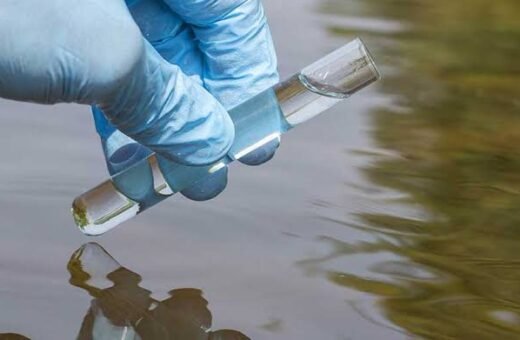
A professional water test can provide a useful baseline. Rather than guessing why equipment is scaling or why drinking water tastes unusual, a business can use test results to identify the conditions that actually need attention.
That’s important because treatment technology isn’t interchangeable. The system should be selected around the problem, not the other way around.
Why Ice Quality Matters
Ice is often overlooked because it seems so simple. Water goes into a machine, freezes, and comes out as cubes. What could go wrong?
Quite a bit, actually.
Ice can pick up the taste and odor characteristics of the water used to make it. Sediment and mineral content may also affect the appearance and operation of an ice machine.
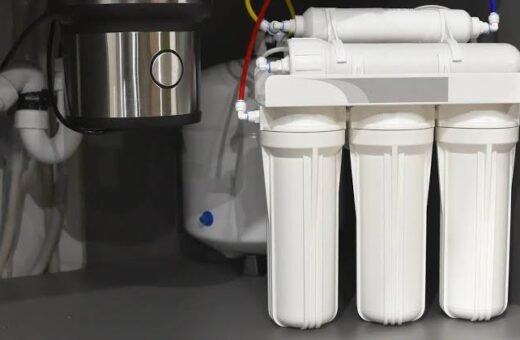
For restaurants, hotels, healthcare facilities, convenience stores, and cafés, ice machine filtration can be an important part of maintaining a reliable ice-making process.
The right filter can help reduce certain particles, chlorine, tastes, odors, or scale-forming substances depending on the system. But it has to be selected according to the machine’s requirements and the incoming water.
And filtration isn’t a substitute for cleaning. Ice machines still need regular sanitation and maintenance according to manufacturer instructions.
Commercial Filtration Isn’t One-Size-Fits-All
A filter that works well for drinking water might not be the best choice for a high-volume food-service application.
Businesses need to think about flow rate, contaminant reduction, filter capacity, and the type of equipment being protected.
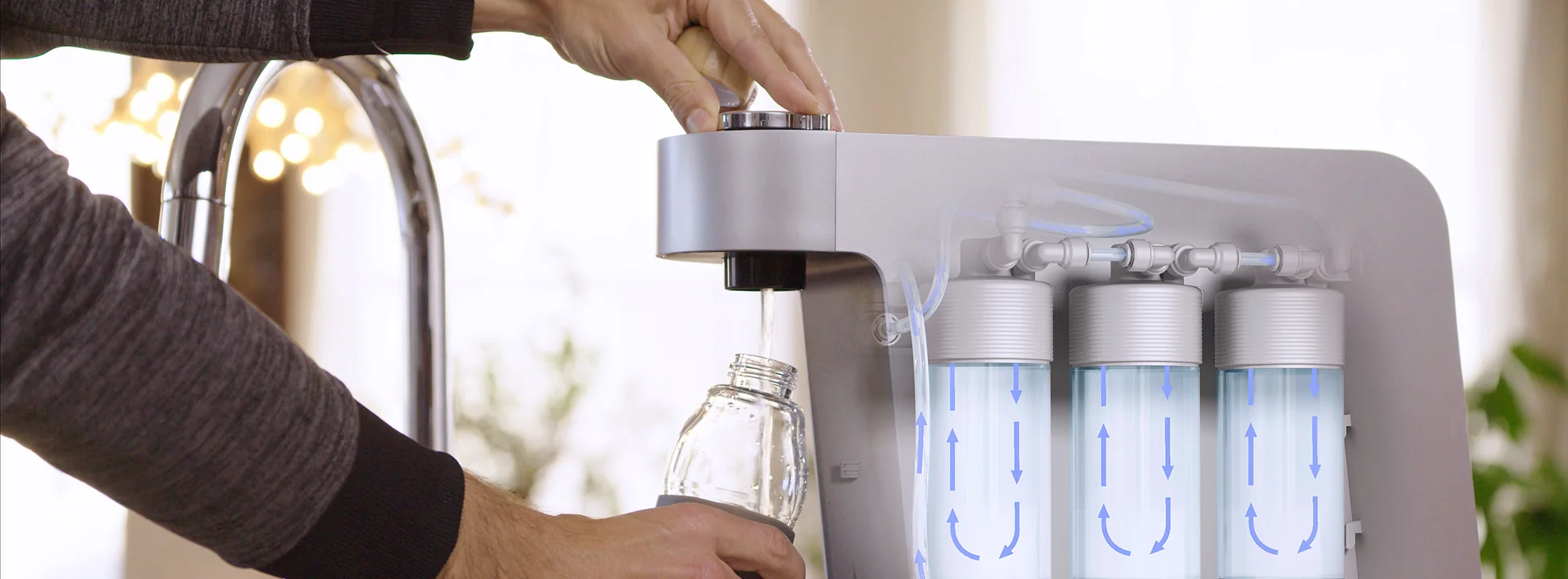
For example, commercial water filters may be designed for sediment reduction, taste and odor improvement, chlorine reduction, or other specific treatment goals. Some applications may require multiple filtration stages.
This is why simply choosing the filter with the highest advertised capacity isn’t always a smart move. The question isn’t “How much can this filter handle?” but “Can this filter handle our water and our application effectively?”
Those are two very different questions.
Water Quality Can Affect More Than Ice
Commercial water is used everywhere.
Coffee machines depend on it. Dishwashers use it. Beverage dispensers, steamers, boilers, washing equipment, and food-preparation systems all interact with water.
If the water contains significant hardness minerals, scale can form inside heating elements and narrow passages. Sediment can clog components. Taste and odor compounds can affect beverages.
A water-treatment strategy should therefore look beyond the drinking station.
Sometimes treating water at a specific point is enough. In other situations, broader treatment may be appropriate. It depends on where the problem occurs and what the water is being used for.
Peak Demand Is Easy to Forget
A commercial system might work beautifully during a quiet afternoon and struggle badly during the lunch rush.
Restaurants are an obvious example. Several sinks may be operating, the dishwasher is running, employees are using water, and beverage or ice equipment is drawing from the same supply.
Hotels, schools, gyms, and healthcare facilities can experience their own demand peaks.
When selecting filtration equipment, businesses should consider maximum flow requirements rather than relying only on average daily consumption.
An undersized filter can create pressure or performance issues. An oversized system, meanwhile, may cost more than necessary.
Good sizing is about finding the practical middle ground.
Scale Can Become an Equipment Problem
Hard water isn’t necessarily a health concern, but it can certainly be a maintenance concern.
Calcium and magnesium can accumulate on fixtures and inside equipment. Over time, that scale may reduce efficiency, restrict water flow, and increase cleaning requirements.
In a commercial environment, even small inefficiencies can become expensive because the equipment is often operating for long hours.
A coffee machine that needs frequent descaling takes staff time. An ice machine with excessive buildup may require additional servicing. A water heater affected by scale may not operate as efficiently as expected.
Treating hardness where appropriate can therefore be part of a broader equipment-maintenance strategy.
Taste and Odor Are Business Concerns, Too
Customers may not know what’s happening inside a filtration system, but they know when a drink tastes strange.
Water can influence coffee, tea, fountain beverages, soups, ice, and other products. For businesses that depend on consistent flavor, water chemistry deserves more attention than it usually receives.
Carbon filtration, for example, is often used to improve taste and reduce chlorine. Other treatment methods may be needed for different water conditions.
The goal isn’t to remove everything from the water. Some minerals are naturally present and may not need to be removed at all.
The goal is appropriate treatment.
Maintenance Should Be Planned Before Installation
One of the easiest ways to make a good filtration system perform poorly is to forget about it after installation.
Filters need to be replaced. Connections need inspection. Some systems require sanitation or other routine service.
Commercial operators should know who is responsible for maintenance and when each component needs attention. Keeping a simple service record can prevent missed replacement dates.
It’s also useful to watch for changes in water taste, pressure, appearance, or ice production. A sudden change can be an early warning that a filter is exhausted or another component needs attention.
Waiting for a complete failure is rarely the best maintenance strategy.
Consider the Real Cost of Water Treatment
Price matters, but the cheapest system isn’t necessarily the most economical.
Businesses should consider filter replacement costs, service, consumables, water usage, installation, and expected equipment life. A low-cost system that needs frequent attention can become surprisingly expensive.
There are indirect costs, too.
Extra cleaning takes employee time. Equipment downtime can disrupt service. Poor-tasting beverages can affect customer satisfaction. Premature equipment repairs can strain a maintenance budget.
A reliable treatment system may justify a higher upfront investment if it reduces these recurring problems.
Installation Is Part of Performance
Commercial filtration equipment has to fit the building as well as the water.
Before installation, consider available space, plumbing configuration, pressure, drainage, electrical requirements, and access for maintenance.
A system tucked into an impossible-to-reach corner may technically work, but changing its filter could become a chore. And chores that are difficult tend to get postponed.
Professional installation can help ensure the system is properly connected, sized, and positioned for the way the facility operates.
Don’t Forget the People Behind the Equipment
Good equipment is important. Good support is important too.
Commercial facilities need access to replacement filters, service, troubleshooting, and technical advice. A provider who understands the application can help when water conditions change or equipment behaves differently than expected.
Before choosing a system, ask practical questions. How often does it need servicing? What parts need regular replacement? Who handles repairs? How quickly can service be arranged?
Those answers can matter just as much as the equipment specifications.
Better Water Starts With a Clear Plan
Commercial water treatment doesn’t need to become another complicated project for a business owner or facility manager.
Start with testing. Understand the water. Identify the applications where quality matters most. Consider ice machines, drinking stations, kitchens, beverage equipment, and other water-dependent systems separately when necessary.
Then choose filtration that fits those specific needs.
Most importantly, remember that installation is only the beginning. Proper maintenance and periodic testing help keep the system performing as intended.
When everything is working properly, the results can seem almost unremarkable: clear ice, better-tasting drinks, protected equipment, fewer cleaning headaches, and fewer unexpected interruptions.
That’s the real value of good water treatment.
It doesn’t need to announce itself. It just needs to work, day after day, while the business gets on with everything else.