Buying a water treatment system can feel a little like buying shoes without knowing your size. You might get lucky, but there’s a good chance you’ll end up with something that doesn’t quite fit.
Water quality is much the same. A system that works beautifully in one home may be unnecessary—or completely wrong—for another. Two properties can sit only a few streets apart and still have different plumbing conditions, water sources, or treatment needs.
That’s why the smartest place to begin isn’t a product catalog. It’s your water.
Maybe you’ve noticed white scale around your faucets. Perhaps the water has a strange taste, an unusual smell, or occasional cloudiness. Or maybe everything seems fine and you simply want to understand what you’re drinking.
Whatever prompted you to look into treatment, getting the facts first can make the entire process easier.
Start With a Water Evaluation
A proper assessment doesn’t have to be complicated.
A free water evaluation can provide an opportunity to discuss what you’re experiencing and identify the kinds of testing or treatment that may be appropriate. The useful part isn’t just the test itself. It’s connecting the results to the actual concerns you have at home.
For example, if your biggest complaint is mineral scale, hardness testing may be more relevant than a broad collection of unrelated treatment options.
If you’re noticing an unusual odor, the source needs to be considered.
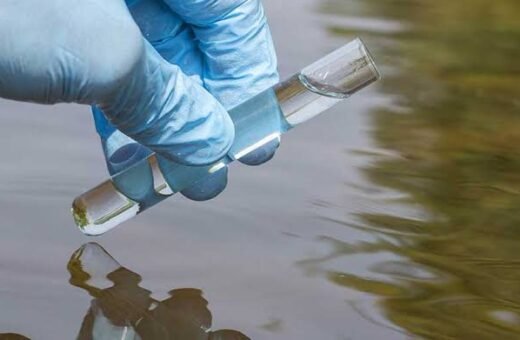
And if you’re concerned about a specific contaminant, targeted laboratory testing may be more appropriate than relying on appearance or taste.
Good decisions start with good information.
Look Beyond What You Can See
Clear water isn’t automatically perfect water.
Many characteristics of water can’t be identified simply by looking into a glass. Dissolved minerals, certain metals, and other substances can be present without changing the water’s appearance.
At the same time, visible problems don’t always mean there’s a serious contamination issue.
Cloudiness, for instance, can sometimes result from tiny air bubbles. A reddish stain may point toward iron, but the plumbing itself could also play a role.
This is why testing is more useful than guesswork.
It gives homeowners something concrete to discuss when deciding whether treatment is necessary and what kind might make sense.
Your Water Source Changes the Conversation
Where your water comes from matters.
Municipal water supplies are treated before reaching homes, while private wells depend on local groundwater conditions. Well-water chemistry can vary with geology, weather, surrounding land use, and other factors.
A homeowner with a private well may therefore have different testing and treatment considerations from someone connected to a municipal supply.
Even municipal water isn’t identical everywhere. Water characteristics can vary between communities and sometimes between different parts of the same service area.
Knowing the source is one of the simplest pieces of information to gather.
Don’t Assume Every Problem Needs a Filter
This is where things can get unnecessarily complicated.
Someone sees scale and buys a filter. Another person notices an odor and purchases a water softener. A third homeowner hears about reverse osmosis and decides it must be the answer to everything.
Water treatment doesn’t work that way.
Different technologies are designed for different purposes.
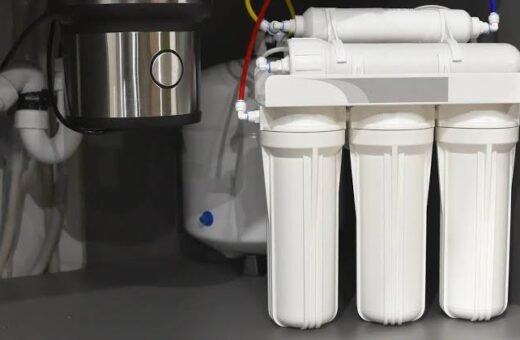
A softener is intended primarily for hardness. Sediment filtration addresses particles. Carbon filtration can help with certain taste and odor concerns. Reverse osmosis can reduce many dissolved substances at the point of use. Ultraviolet treatment is used for certain microbiological concerns.
Choosing technology based on the actual problem usually produces a better result than buying equipment because it sounds impressive.
A Personalized Recommendation Can Save Money
Once the water and household needs are understood, the next step is matching treatment to the situation.
A personalized system recommendation should take more into account than a water test alone.
Household size matters. So does water usage, available space, plumbing configuration, budget, maintenance preferences, and whether you want treated water throughout the home or only at selected fixtures.
Imagine two homes with identical hardness levels.
One has two residents and modest water consumption. The other has six people, several bathrooms, and heavy daily use.
They may need different equipment capacities even though the water chemistry looks similar.
That’s why context matters.
Think About Where You Need Treated Water
Not every household needs every gallon treated in the same way.
If your main concern is drinking and cooking water, a point-of-use system might be practical.
If hardness is affecting showers, appliances, and plumbing throughout the property, whole-home treatment may make more sense.
Some households use multiple treatment technologies because each serves a different purpose.
There’s nothing wrong with that, as long as each component has a clear job.
A treatment system should be designed around your needs, not built simply to contain as many stages as possible.
Installation Is Part of the Solution
Even the right equipment can perform poorly when installed incorrectly.
A professional installation can help ensure that plumbing connections, flow direction, pressure, drainage, bypass valves, and other components are configured correctly.
Equipment location matters too.
Filters and tanks need enough room for service. Shutoff valves should remain accessible. Drain lines need to be properly arranged where required.
It may seem like minor plumbing detail, but these things become very important when something needs attention six months later.
A system that’s easy to maintain is much more likely to be maintained.
Don’t Forget Water Pressure
Water pressure is an often-overlooked part of treatment planning.
Some systems need a certain pressure range to operate properly. Reverse osmosis is a good example because membrane performance depends heavily on available pressure.
If your home’s pressure is already low, adding treatment equipment without considering that condition could make the problem more noticeable.
A proper assessment should therefore consider existing plumbing performance, not just the water chemistry.
Maintenance Should Be Explained Up Front
Before buying anything, ask what happens after installation.
How often do filters need replacement? Does the system use salt? Does it require electricity? How often should components be inspected? What does routine service typically involve?
These questions aren’t meant to make the process intimidating.
Quite the opposite. Knowing what maintenance looks like helps you choose equipment you’ll realistically keep in good condition.
A system that is neglected because maintenance feels confusing isn’t likely to deliver its best performance.
Consider the Cost Over Several Years
The purchase price is only one part of the expense.
Replacement cartridges, membranes, salt, electricity, water usage, service calls, and eventual component replacement can all affect ownership costs.
A less expensive system isn’t necessarily the cheaper option in the long run.
At the same time, paying for features you don’t need isn’t smart either.
Look for balance. The right system should provide useful treatment without unnecessary complexity or expense.
Ask Questions Before Saying Yes
Don’t be afraid to ask simple questions.
What exactly is this system designed to remove or reduce? Why do I need this particular treatment? How long do the filters last? What happens if the system stops working? What maintenance will I need to handle?
A reputable water-treatment professional should be comfortable answering these questions in plain English.
If an explanation sounds more complicated every time you ask for clarification, that’s a sign to slow down.
You should understand what you’re buying.
Good Water Treatment Starts With Listening
The best treatment decisions aren’t made by choosing the fanciest equipment.
They’re made by listening to what the water is doing, understanding the household’s needs, and selecting technology that addresses those needs without going overboard.
Testing provides information. A thoughtful recommendation turns that information into a practical plan. Proper installation gets the system working as intended. Regular maintenance keeps it performing over time.
It’s really a chain, and every link matters.
You don’t need to become a water-quality expert to make a smart decision. Start with the basics, ask questions, and focus on what your home actually needs.
When the system fits the water and the people using it, the benefits become wonderfully ordinary: better-tasting water, fewer annoying plumbing problems, and one less thing to worry about every day.