Water usually gets very little attention when everything is normal. You fill a glass, turn on the shower, wash the dishes, and move on. It’s one of those basic comforts that works so quietly we hardly think about it.
Then one day, the glass looks different.
Maybe the water appears hazy. Perhaps you notice particles settling at the bottom after filling a container. Or a faucet that used to look clean suddenly has a stubborn ring around it.
These changes can be unsettling, but they don’t automatically mean there’s a serious problem. Water appearance can be affected by air, minerals, sediment, plumbing conditions, temperature, and changes in the supply.
The useful thing is to treat these signs as clues rather than conclusions.
Instead of immediately buying new equipment, take a closer look at what’s happening and when it happens. A little investigation can go a long way.
Cloudiness Isn’t Always What It Seems
The first thing homeowners often notice is cloudy water.
Interestingly, cloudy or milky-looking water isn’t necessarily contaminated. In some cases, tiny air bubbles become suspended in the water and make it look white or hazy. If you pour the water into a clear glass and it gradually becomes transparent from the bottom upward, trapped air may be the explanation.
Temperature can also affect appearance.
However, if cloudiness persists, occurs repeatedly, or comes with an unusual odor, taste, or particles, it’s reasonable to investigate further.
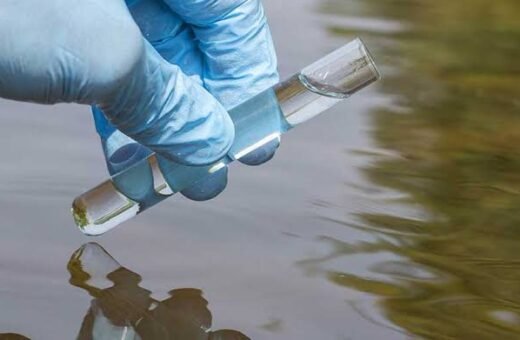
Don’t rely on appearance alone to determine water quality. If the change is persistent, appropriate testing can provide much better information.
Sediment Can Come From Several Places
Particles in a glass can be more concerning because they’re easier to see.
Sediment in water may come from a private well, plumbing materials, disturbances in the supply, or changes somewhere in the water system.
You might find small particles collecting in faucet aerators or notice residue inside a filter housing. In some cases, sediment can clog treatment equipment faster than expected.
If the amount suddenly increases, changing the filter repeatedly may not be enough. It can be more useful to investigate where the particles are coming from.
For well owners especially, a sudden change deserves attention rather than a quick assumption that it’s simply “normal.”
Staining Can Leave Useful Clues
Faucets, sinks, tubs, and shower surfaces can reveal things that aren’t immediately obvious in a glass of water.
Staining on sinks or fixtures may be associated with minerals such as iron or manganese, depending on the water chemistry. Rust-colored or orange marks, for example, can sometimes be linked to iron.
Hardness can also contribute to deposits, particularly when water evaporates and leaves minerals behind.
Staining doesn’t provide a definitive diagnosis, though. Cleaning products, plumbing materials, and surface conditions can affect what you see.
If staining keeps returning soon after cleaning, that’s when it becomes worth asking whether the water itself is contributing.
Look at More Than One Faucet
One of the easiest troubleshooting steps is also one of the most useful: check several fixtures.
Fill a glass from the kitchen faucet. Then compare it with water from a bathroom faucet.
If only one fixture produces particles or unusual-looking water, the issue could be localized. An aerator may need cleaning, or the fixture itself could be contributing.
If the same problem appears everywhere, the cause may be farther upstream.
This simple comparison can help narrow down the possibilities before you spend money on treatment equipment.
Hot Water Tells a Different Story
Water appearance can change depending on temperature.
If a problem occurs only with hot water, consider the water heater as a possible source. Storage tanks can accumulate sediment over time, and that material may occasionally affect hot-water appearance.
Try running cold water for a while and compare it with hot water from the same faucet.
If the cold water looks normal while the hot water contains particles or has an unusual odor, the water heater deserves attention.
It may not be a filtration problem at all.
Private Well Water Needs Regular Monitoring
Private wells can provide excellent household water, but they also require ongoing attention from the homeowner.
Groundwater characteristics vary based on local geology and conditions. Minerals, iron, sediment, and other substances can affect appearance and taste.
A well that has always produced clear water can still experience changes.
That’s why regular testing is useful for private well owners. Establishing a baseline makes it easier to recognize when something has shifted.
If the water suddenly becomes cloudy or develops noticeable particles, don’t simply increase filtration or replace the existing equipment without investigating.
The cause matters.
Water Testing Can Clear Up Confusion
It’s easy to make assumptions based on what water looks like.
A white haze might be air. A dark particle might be sediment. An orange stain might be related to iron.
But visual clues have limits.
Water testing can help determine characteristics such as hardness, pH, iron, and other factors depending on the analysis performed.
The test should be appropriate for the concern. You don’t necessarily need every possible analysis.
Think of testing as a way to replace guesswork with information.
Once you know what’s actually happening, choosing treatment becomes much easier.
Not Every Problem Needs a Whole-House System
Homeowners sometimes assume that visible water problems require a major filtration installation.
Not necessarily.
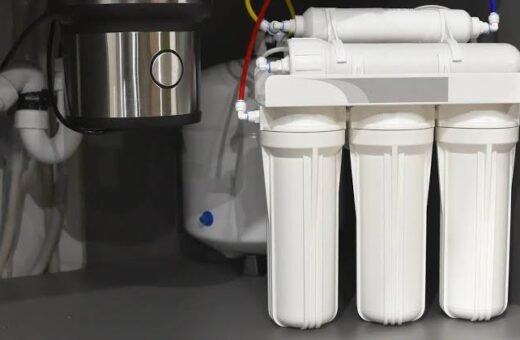
If the issue is isolated to one faucet, a fixture-level repair may be enough. If sediment is present throughout the home, a properly selected sediment filter may be appropriate. If hardness is creating deposits, a softening solution could be more relevant.
The treatment should match the problem.
Adding several pieces of equipment without knowing what they accomplish can increase maintenance and operating costs without delivering meaningful benefits.
Simple solutions can be very effective when they’re properly chosen.
Filters Can Become Part of the Problem
Filtration equipment needs maintenance.
As a filter captures particles, its capacity gradually decreases. Eventually, flow may become restricted.
If you notice lower pressure after a filter has been in service for a long time, check the filter before assuming the plumbing has failed.
On the other hand, if a new filter becomes clogged unusually quickly, that’s useful information too. It could indicate higher-than-expected sediment levels or another upstream change.
The filter isn’t just a component. Sometimes it’s also a clue.
Water Pressure Deserves Attention
Water appearance isn’t the only thing worth monitoring.
A sudden drop in pressure can sometimes accompany filtration problems, clogged components, or plumbing restrictions.
Notice whether pressure changes at every fixture or only one. Pay attention to whether the problem appears when multiple faucets are running.
This can help distinguish between a local fixture issue and a broader flow problem.
Don’t automatically replace treatment equipment because the shower feels weak. Find out what’s restricting the flow first.
Keep an Eye on Appliances
Your appliances can also reveal water-quality patterns.
Coffee makers may develop mineral scale. Dishwashers can leave spots on glassware. Water heaters can collect sediment. Humidifiers may develop mineral residue.
One symptom isn’t enough to establish a cause.
But if several appliances and fixtures show similar signs, the water may be worth investigating.
A pattern across different parts of the house is often more meaningful than a single isolated complaint.
Maintenance Is Easier When It’s Routine
Water treatment isn’t something you should have to think about every day.
Still, occasional attention matters.
Replace filters according to their service requirements. Check connections for leaks. Keep equipment accessible. Follow maintenance recommendations for softeners, filtration units, or other treatment equipment.
A simple calendar reminder can help.
It’s much easier to spend ten minutes checking a system than to discover a preventable problem after water has leaked across the utility-room floor.
Don’t Let Appearance Create Unnecessary Panic
Water can look unusual for harmless reasons, but persistent changes shouldn’t be ignored.
The right response is neither panic nor complete dismissal.
Observe the pattern. Check multiple fixtures. Compare hot and cold water. Consider the water source and plumbing. Test when appropriate.
Then decide whether treatment or repair is actually necessary.
That approach keeps the process practical.
Better Decisions Start With Better Information
Your home’s water can tell you quite a bit if you know what to look for.
Cloudiness, particles, deposits, stains, taste, odor, and pressure changes are all pieces of a larger puzzle. None should automatically be treated as a diagnosis.
Take the time to understand the source of the issue before choosing equipment.
Sometimes the answer is a cleaned faucet aerator. Sometimes it’s a filter replacement. Sometimes testing reveals a water characteristic that calls for more targeted treatment.
And sometimes, thankfully, the water is perfectly fine.
The goal isn’t to treat water simply because you noticed something unusual. It’s to understand what changed and respond appropriately.
When you take that approach, water treatment becomes less about guesswork and more about making sensible choices for the home you actually live in.