There’s a strange little contradiction about drinking water. We need it constantly, yet most of us barely think about it until something seems off.
Maybe the water has a mineral taste. Maybe there’s a faint odor when you first turn on the tap. Perhaps the family has quietly started buying bottled water because nobody really enjoys drinking what’s coming from the kitchen faucet.
That’s when water treatment starts to feel less like a luxury and more like a practical household decision.
The goal isn’t necessarily to install the most sophisticated equipment available. It’s to understand the water, identify what you want to improve, and choose a system that fits the way your household actually uses it.
Sometimes, simple is better. Other times, a more advanced system makes sense.
Start With What the Water Is Telling You
Water quality can vary considerably from one property to another.
Municipal water goes through treatment before it reaches your home, while private wells depend on local groundwater conditions. Plumbing, seasonal changes and household equipment can also influence what comes out of the faucet.
Testing is a useful first step because it turns vague complaints into measurable information.
If the main issue is taste, the treatment approach may be different from a situation involving hardness, sediment or dissolved substances.
There’s no reason to pay for equipment designed to solve a problem you don’t have.
A Fresh Look at Reverse Osmosis
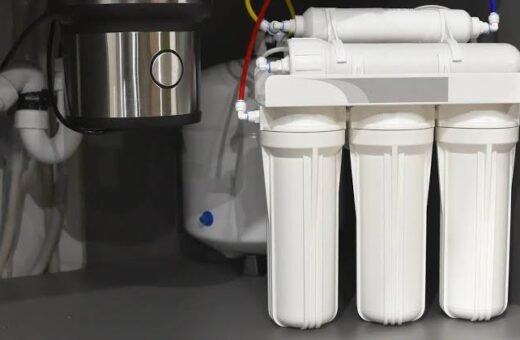
Reverse osmosis has become increasingly common in residential drinking-water systems. The basic principle is fairly straightforward: pressure pushes water through a semipermeable membrane, reducing many dissolved substances in the process.
Traditional RO systems often use a storage tank to hold treated water until it’s needed.
But technology has moved forward.
Tankless reverse osmosis systems are designed to produce treated water on demand without relying on the same type of storage tank. They can take up less cabinet space and may provide a convenient option for modern kitchens where every inch of storage matters.
That doesn’t mean tankless is automatically better. System capacity, water pressure, filtration stages, efficiency and maintenance requirements should all be considered before making a choice.
Why Cabinet Space Matters
Under-sink space has become surprisingly valuable.
Between trash bins, cleaning supplies, plumbing, cookware and everything else that somehow ends up in a kitchen cabinet, a large storage tank can feel like it’s taking over.
Tankless designs can provide an alternative for homeowners who want reverse osmosis treatment while keeping more usable space beneath the sink.
However, compact equipment still needs proper installation.
The system must have adequate water pressure and flow, and the installation should account for drainage, electrical requirements if applicable, filter access and the location of the dedicated faucet.
Small equipment doesn’t mean fewer technical considerations.
Taste Can Be the Biggest Motivation
Water quality isn’t always about something dramatic.
Sometimes homeowners simply don’t like the way their tap water tastes.
Minerals, disinfectants and other dissolved substances can influence flavor. Even when the water meets applicable standards, personal preference can lead someone to seek additional filtration.
That’s where improved taste and odor becomes a meaningful goal.
Carbon filtration is commonly used to reduce certain taste and odor characteristics, while reverse osmosis can address a broader range of dissolved substances.
The right technology depends on the source water.
A simple taste complaint doesn’t necessarily justify a complicated treatment system, and an advanced system won’t necessarily fix every possible odor.
Cleaner Water Doesn’t Mean Removing Everything
It’s easy to think that “cleaner” means water with absolutely nothing dissolved in it.
That’s not really how drinking water works.
Water naturally contains minerals, and some mineral content is completely normal. The purpose of treatment is generally to reduce or manage specific characteristics that affect quality, taste or household needs.
For homeowners considering filtration, cleaner drinking water should therefore be defined in practical terms.
Maybe you want to reduce a particular dissolved substance. Perhaps you’re trying to improve taste. You might be dealing with well-water characteristics that require specialized treatment.
The goal should be clear before the equipment is selected.
Reverse Osmosis Needs Good Pretreatment
One detail that’s sometimes overlooked is the water entering the RO membrane.
Sediment and certain water characteristics can affect membrane performance. That’s why RO systems commonly include prefilters.
Depending on the incoming water, additional pretreatment may be appropriate.
For example, a home with significant sediment may need better particle filtration before the water reaches the membrane. A property with very hard water may require another treatment approach to protect equipment.
Testing helps determine what makes sense.
An RO membrane is a hardworking component. Giving it the right conditions can improve both performance and service life.
Don’t Forget About Water Efficiency
Reverse osmosis systems can produce wastewater as part of the treatment process.
Modern equipment can be designed with improved efficiency, but homeowners should still ask about water recovery and waste ratios when comparing systems.
This is especially important for people who are conscious of water use.
A system that produces excellent drinking water but wastes more water than necessary may not be the best fit for every household.
Ask how much water the system uses to produce a gallon of treated water. It’s a simple question that can reveal a lot.
Maintenance Still Matters
Advanced filtration isn’t maintenance-free.
Filters need replacement. RO membranes have a useful service life. Connections and other components should be inspected periodically.
The maintenance schedule depends on the equipment and incoming water quality.
Keeping a basic record can help. Write down when filters are installed and when they should be replaced.
It’s easy to forget these things, especially when the system sits quietly under the kitchen sink for months.
If water flow decreases or the taste changes, don’t ignore it. Those can be signs that the system needs attention.
Compare the Whole Cost, Not Just the Price
The initial purchase price is only one part of owning a water treatment system.
Consider replacement filters, membrane costs, maintenance, water efficiency and professional service.
A less expensive system may require more frequent filter changes. A premium system may cost more upfront but offer features that make maintenance easier.
Neither is automatically the better choice.
The right system is the one whose performance, maintenance and operating costs make sense for your household.
When Whole-Home Treatment May Be Better
A drinking-water system is useful when the concern is primarily at the kitchen faucet.
But if hardness, iron, sediment or other issues affect showers, appliances and multiple faucets, a whole-home system may be more appropriate.
There’s nothing wrong with using both approaches.
For example, a household might use a whole-home softener to manage hardness while using reverse osmosis for drinking and cooking.
Different problems can have different solutions.
Make the Decision Based on Your Water
The best water treatment setup isn’t determined by the number of features listed on the product box.
It starts with the water.
Test it. Understand the results. Think about how your household uses water and what bothers you most.
Then compare treatment options based on what they are designed to do.
If taste and odor are the issue, targeted filtration may be enough. If dissolved substances are the concern, reverse osmosis may be worth considering. If the entire home has water-quality problems, broader treatment may make more sense.
There’s no need to overcomplicate it.
Good Drinking Water Should Feel Effortless
At the end of the day, water treatment is supposed to make life easier, not add another chore.
When the right system is properly selected and maintained, you shouldn’t spend much time thinking about it. You fill a glass, make coffee, cook dinner and get on with your day.
That’s the quiet benefit of good filtration.
Not flashy technology. Not a complicated collection of equipment.
Just water that tastes good, fits your household needs and feels dependable every time you turn on the tap.