A kitchen water filter isn’t usually something you notice.
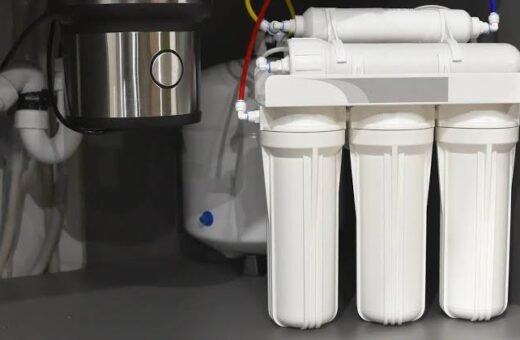
You turn on the faucet, fill a glass, make coffee and move on. The equipment itself tends to disappear beneath the counter, quietly doing its job while the rest of the kitchen carries on around it.
But once you start looking at filtration systems, the little details become surprisingly interesting. The number of stages, the type of faucet, the tubing, the fittings and even the way everything is organized can affect how practical the system feels in everyday life.
That’s worth considering because water treatment isn’t only about what’s happening inside a filter. It’s also about how easily the entire setup fits into your routine.
Start With the Water, Not the Equipment
It’s easy to fall into the trap of shopping first.
A product looks impressive, the specifications sound advanced, and suddenly you’re comparing systems without knowing what your own water actually needs.
A better approach is to start with the water source and the problem you’re trying to solve.
Taste and odor concerns may call for a different treatment approach than sediment, hardness or certain dissolved substances. Water testing can provide useful information when the issue isn’t obvious.
Once you understand the problem, the equipment becomes easier to evaluate.
You’re no longer asking, “Which filter is best?”
You’re asking a much better question: “Which filter is appropriate for my water?”
Why the Combination of Filters Matters
Many drinking-water systems use more than one filtration stage because different materials perform different jobs.
A sediment filter may capture particles. Activated carbon can help reduce certain tastes and odors. Other filtration technologies can target additional substances.
The filter combination matters because each stage can support the next.
For example, a pre-filter may protect a finer filter from becoming overloaded too quickly. A carbon stage can address concerns that a simple sediment filter can’t touch.
The exact arrangement depends on the system and the incoming water.
More stages aren’t automatically better, either. Every additional cartridge has a purpose, a replacement schedule and an ongoing cost.
The Faucet Is More Important Than You Might Think
Once the filtration equipment is installed under the sink, the faucet becomes the part you interact with every day.
It should be comfortable to use and appropriate for the kitchen.
Some homeowners also care about appearance. A filtration faucet doesn’t have to look like an afterthought, especially in a carefully designed kitchen.
Modern designer style nsf certified colored faucets can combine a more decorative appearance with certification for applicable performance standards.
Of course, certification should be evaluated based on what it actually covers. The color or design may catch your eye, but the important question is whether the faucet is appropriate for use with the intended drinking-water system.
Color Can Have a Practical Purpose
Colored components aren’t necessarily just about aesthetics.
In a system with several tubes and connections, visual differences can make it easier to identify where each line goes.
That can be especially helpful during maintenance.
If you’ve ever crawled under a kitchen sink and wondered which tube connects to which component, you know the feeling. Everything seems to have the same shape, especially when you’re working in poor lighting.
nsf certified color coded tubing can provide an additional visual reference when properly matched to the system.
It doesn’t eliminate the need to understand the installation, but it can make the setup easier to follow.
Certification Deserves a Closer Look
The term “certified” can sound reassuring, but homeowners should still look at the details.
Certification can apply to specific components, materials or performance claims. It doesn’t necessarily mean that an entire filtration system removes every substance a homeowner might be concerned about.
When comparing products, check what standard applies and what the certification actually verifies.
This is especially important for components that come into contact with drinking water.
A reliable manufacturer should be able to explain the certification without making you feel like you’ve wandered into a chemistry lecture.
Cabinet Space Is a Real Constraint
Water filtration systems may be compact, but the area under a kitchen sink is often anything but spacious.
There are pipes, cleaning products, garbage disposals, plumbing connections and occasionally a collection of things nobody remembers putting there.
Before installation, measure the available space.
If the system uses a storage tank, account for its dimensions. If it is tankless, check the required clearance around the unit.
And leave enough room for maintenance.
A filter cartridge that technically fits but requires you to remove half the cabinet contents every time it needs changing isn’t exactly convenient.
Think About Water Demand
Not every household uses filtered water in the same way.
One person may fill a glass occasionally. A large family might use filtered water for drinking, cooking, coffee and ice every day.
That difference affects the capacity and flow requirements of the system.
Consider how much water your household actually uses and when demand tends to peak.
If everyone fills bottles before school or work, a slow system can become frustrating pretty quickly.
The goal is to choose equipment that fits real habits, not an imaginary average household.
Don’t Forget Water Pressure
Pressure can affect the performance of certain filtration technologies.
If pressure is too low, flow may be reduced. Some systems may require specific operating conditions to perform properly.
This is particularly important for reverse osmosis systems, which use pressure to move water through a membrane.
If you’re installing a new system, check the manufacturer’s pressure requirements and make sure your plumbing can support them.
It’s a small step that can prevent a surprisingly large headache.
Maintenance Should Be Easy Enough to Remember
Filtration systems aren’t completely set-and-forget.
Filters need replacement. Connections should be inspected. Certain systems require sanitation or additional service.
The easier these tasks are to perform, the more likely you’ll actually keep up with them.
Write down the installation date. Set calendar reminders. Keep replacement cartridges somewhere easy to find.
And don’t wait for the water to taste strange before checking the filters.
Some performance changes happen gradually, so you may not notice them immediately.
Replacement Costs Matter
A filtration system’s price tag doesn’t tell the whole story.
Look at the cost of replacement filters and how frequently they need to be changed.
A system that costs slightly more initially might be less expensive to operate if its cartridges last longer or are readily available.
On the other hand, a premium system isn’t necessarily worthwhile if its additional features don’t address anything your household actually needs.
Think about ownership over several years rather than the day of installation.
Good Design Shouldn’t Get in the Way
The best kitchen filtration setup is one you barely notice.
It should deliver treated water conveniently, fit the available space and make routine maintenance manageable.
If the faucet looks good, that’s a bonus. If color-coded components make the installation easier to understand, even better.
But appearance should never replace performance.
Start with water quality. Choose appropriate treatment. Then consider the details that make the system comfortable to live with.
Small Details Add Up
Water filtration may seem like a purely technical subject, but the experience of using a system is surprisingly personal.
You notice whether the faucet feels good. You notice whether water flows quickly enough. You notice how difficult it is to change a cartridge. And yes, you notice whether the setup looks like it belongs in your kitchen.
Those details matter because a filtration system isn’t something you buy and forget about completely.
It’s part of everyday life.
Choose equipment based on your actual water and household needs. Pay attention to certification, installation and maintenance. Don’t be distracted by features that sound impressive but don’t solve a real problem.
In the end, good water treatment isn’t about making the kitchen more complicated.
It’s about making one simple part of daily life work a little better.
Turn on the faucet, fill the glass, and carry on.
That’s the kind of improvement that tends to stick.