Water can be perfectly clear in a glass and still leave you wondering what’s going on.
Maybe a bathroom sink develops rusty-looking marks. Perhaps freshly washed dishes have an odd film. The coffee tastes slightly different than usual. At a commercial property, these little clues can become more than an annoyance. They may affect appliances, plumbing, cleaning routines, food preparation, or the consistency of a process.
The good news is that water problems are often easier to understand once you stop treating “bad water” as one single thing. Different substances create different symptoms, and the right treatment depends on what is actually present.
That sounds obvious, but it matters. A filter designed to improve taste won’t necessarily solve mineral staining, and equipment chosen to address hardness may not be appropriate for a specific contaminant.
So before reaching for the biggest filtration system you can find, it helps to take a closer look.
Stains Are Often the First Clue
One of the most frustrating water problems is staining.
Orange, reddish-brown or dark marks around sinks and fixtures can make otherwise clean spaces look neglected. In some cases, iron and mineral staining is responsible. Iron in water can oxidize and leave visible deposits, while other minerals may contribute to scale and discoloration.
This can happen in homes, offices, restaurants, hotels and industrial settings. The severity depends on the concentration of minerals, the water chemistry and how frequently surfaces are exposed.
Cleaning the stain may make the sink look better for a while, but if the underlying water continues to carry the same substances, the marks will return.
That’s when treatment becomes worth considering.
Not Every Stain Has the Same Cause
It’s easy to assume that every reddish stain comes from iron.
Sometimes that’s true. Sometimes it isn’t.
Water chemistry is complicated, and staining can be influenced by manganese, hardness minerals, plumbing conditions and other factors. Even the way water interacts with air can change how certain substances behave.
This is why testing is more useful than guessing.
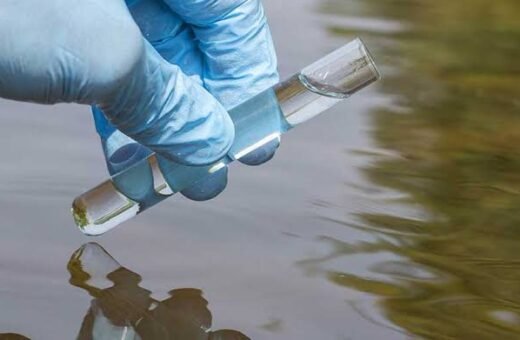
A water test can help identify whether iron, manganese, hardness or another characteristic is contributing to the problem. Once the cause is known, treatment options become much clearer.
Trying several random filters in succession can cost more than getting useful information at the beginning.
Taste and Odor Can Be Just as Noticeable
Appearance isn’t the only thing people notice.
Water may look completely normal while having a metallic, earthy, chlorine-like or otherwise unusual taste. Odor can also become noticeable, particularly when water has certain organic or inorganic substances present.
For businesses serving customers, taste and odor concerns can be especially important.
A restaurant may rely on water for coffee, tea, ice and cooking. A hotel wants guests to feel comfortable drinking from the tap. An office may simply want employees to have water they actually enjoy drinking.
Activated carbon is commonly used for certain taste and odor issues, especially chlorine-related ones. But carbon isn’t a universal solution.
The treatment needs to match the substance causing the problem.
Iron Treatment Can Take Different Forms
If testing confirms elevated iron, the next question is what type of iron is present.
Iron can occur in forms that behave differently in water. Some forms are visible as particles or rust-like material, while dissolved iron may remain clear until it is exposed to oxygen.
Treatment may involve filtration, oxidation and specialized media, depending on the water chemistry.
This is another reason a “one filter fits everything” approach can disappoint. The system needs to be designed around the actual form and concentration of iron, along with flow requirements.
For larger properties, proper sizing becomes particularly important.
Water Problems Can Affect More Than Appearance
It’s tempting to think of water staining as a cosmetic issue.
Sometimes it is. But mineral-heavy or poorly conditioned water can affect equipment, plumbing and maintenance requirements as well.
Scale can accumulate inside water heaters, boilers, valves and other components. Sediment can restrict small passages or clog filters. Certain substances can interfere with equipment designed around specific water-quality requirements.
The costs may appear slowly, which makes them easy to overlook.
A few extra cleaning tasks here and there don’t seem expensive until someone adds up the labor, replacement parts and downtime over several years.
Commercial Applications Need More Specific Thinking
A business often has more complicated water requirements than a typical household.
A restaurant needs water suitable for food preparation and beverage service. A laundry may be concerned about hardness and detergent performance. A manufacturing process may have very specific requirements for dissolved minerals or other substances.
This is where application-specific contaminants become an important consideration.
The question isn’t simply, “How do we make this water cleaner?”
It’s, “What does this particular process require the water to contain — or not contain?”
That shift in perspective can completely change the treatment strategy.
Testing Should Come Before Equipment Selection
Water testing doesn’t have to be complicated.
The appropriate testing depends on the source and the suspected problem. A basic analysis may provide information about hardness, pH, iron, manganese and dissolved solids. Additional testing may be appropriate when there’s a concern about a particular contaminant.
For private wells, periodic testing is especially valuable because conditions can change.
Commercial facilities may also need to consider process-specific testing based on how water is being used.
The results give you something concrete to work with.
Instead of comparing dozens of filtration products, you can focus on technologies designed to address the actual characteristics of the water.
Flow Rate Matters in Busy Facilities
Treatment isn’t useful if the system can’t keep up.
A restaurant may have multiple sinks operating during a busy service. A hotel can experience heavy water use in the morning. An industrial facility may have high demand during specific production periods.
System capacity should account for these peaks.
A filter that performs well at a low flow rate may behave differently when demand increases. Pressure drop can become an issue, particularly as filters collect material.
That’s why system sizing should consider both average consumption and peak flow.
Maintenance Is Part of the Solution
No filtration system is maintenance-free.
Filters need replacement. Media may need servicing or regeneration. Mechanical components can require inspection.
If maintenance is ignored, even a well-designed system can gradually lose performance.
Commercial facilities should establish a realistic maintenance schedule based on water conditions and usage rather than relying solely on a generic calendar.
Keep records of filter changes, service visits and water testing. It makes troubleshooting much easier later.
Don’t Treat Every Water Problem the Same Way
A common mistake is assuming one technology should handle every issue.
A sediment filter may be useful for suspended particles. Carbon can help with certain taste and odor problems. A softener can address hardness. Specialized filtration may be necessary for iron, manganese or particular contaminants.
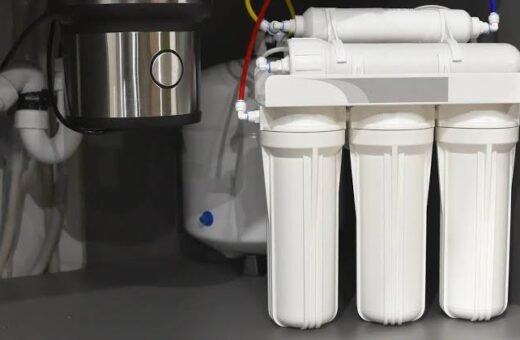
Reverse osmosis may be appropriate for certain drinking-water applications where reducing dissolved substances is the goal.
These technologies can sometimes be used together, but they shouldn’t be combined simply because a longer list of equipment sounds better.
More equipment means more maintenance, cost and potential points of failure.
Look at the Bigger Cost
The price of a treatment system is only one part of the decision.
Consider replacement filters, service, water consumption, energy use and equipment lifespan. Most importantly, consider what happens if the water problem isn’t addressed.
Repeated cleaning, damaged equipment, poor product consistency or unexpected downtime can quickly become more expensive than preventative treatment.
The right system should make financial sense as well as technical sense.
A Better Way to Approach Water Quality
The smartest water-treatment decisions usually begin with curiosity rather than fear.
Notice the clues. Stains, unusual tastes, odors, scale and changing water pressure can all tell you something. Then test the water and determine whether the issue is cosmetic, operational or genuinely important to health or a specific process.
From there, choose treatment based on evidence.
Water doesn’t need to be stripped of everything to be useful. It needs to be appropriate for the people, equipment and processes depending on it.
And that’s really the heart of good water treatment. Understand the problem first, choose technology for a reason, and maintain it properly.
Do that, and the stains may stop coming back, the water may taste better, and the equipment quietly doing its job may stay healthier for years.