Most people don’t think much about their water until something feels off. A glass has a strange taste. The shower leaves a film behind. White spots keep appearing on the dishes, no matter how often the kitchen gets cleaned.
Those little annoyances can be easy to dismiss. After all, water is water, right?
Not quite.
Water quality can vary significantly depending on the source, plumbing, local conditions and treatment already in place. For homeowners using a private well, those differences can be even more noticeable. Even municipal water can develop issues as it travels through household pipes.
The good news is that you don’t have to guess what’s happening. A sensible water-quality check can give you a starting point, and from there, treatment decisions become much easier to make.
Start With the Water, Not the Equipment
Walk into almost any home-improvement store and you’ll find shelves filled with filters, cartridges, softeners and other treatment equipment.
It’s tempting to pick something that promises cleaner, better-tasting water and call it a day.
But treatment works best when it addresses a known problem.
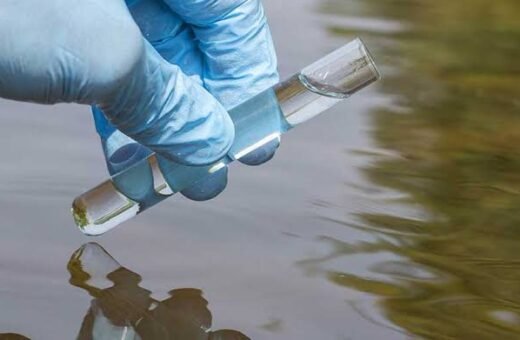
If you’re considering in-home water testing, use it as a way to understand what you’re dealing with rather than simply confirming what you already suspect. Depending on the source and reason for testing, water may be evaluated for characteristics such as hardness, pH, iron, manganese, nitrate and microbiological conditions.
Not every home needs every test.
A qualified laboratory or water professional can help determine which tests make sense for the particular water source.
What Does a Water Test Actually Tell You?
A water test isn’t a magic report that says, “Buy this exact filter.”
Instead, it gives you useful information about the water.
For example, elevated hardness can explain why soap doesn’t lather well and why mineral deposits keep returning to faucets. Iron may explain orange staining. Certain bacteria may point toward a problem that needs investigation beyond ordinary filtration.
The results give homeowners something much more valuable than a product recommendation: context.
Once you know what’s present, you can start comparing treatment methods based on their actual purpose.
Hard Water Has a Way of Making Itself Known
Hard water is common in many groundwater supplies.
Calcium and magnesium are the primary minerals responsible for hardness. They aren’t necessarily something homeowners can see floating in a glass, but their effects tend to show up around the house.
Maybe the shower door always looks cloudy. Perhaps your favorite drinking glasses come out of the dishwasher covered in spots. You may even notice that laundry feels stiff or that soap seems reluctant to rinse away.
These are everyday signs that hardness could be worth investigating.
When a Softener Is the Right Tool
A filter and a softener don’t perform the same job.
Water softeners are designed to reduce hardness minerals, commonly through an ion-exchange process. The result can be less scale buildup and a different feel to water during bathing and cleaning.
The size of the softener matters, too.
A system that’s too small may regenerate more frequently than necessary, while an oversized unit can add cost without providing a practical advantage.
Household size, water consumption and hardness levels should all be considered when determining appropriate capacity.
Whole-Home Treatment Has a Different Goal
Some homeowners mainly want better drinking water. Others want to improve the water used throughout the house.
That’s where whole home filtration can become useful.
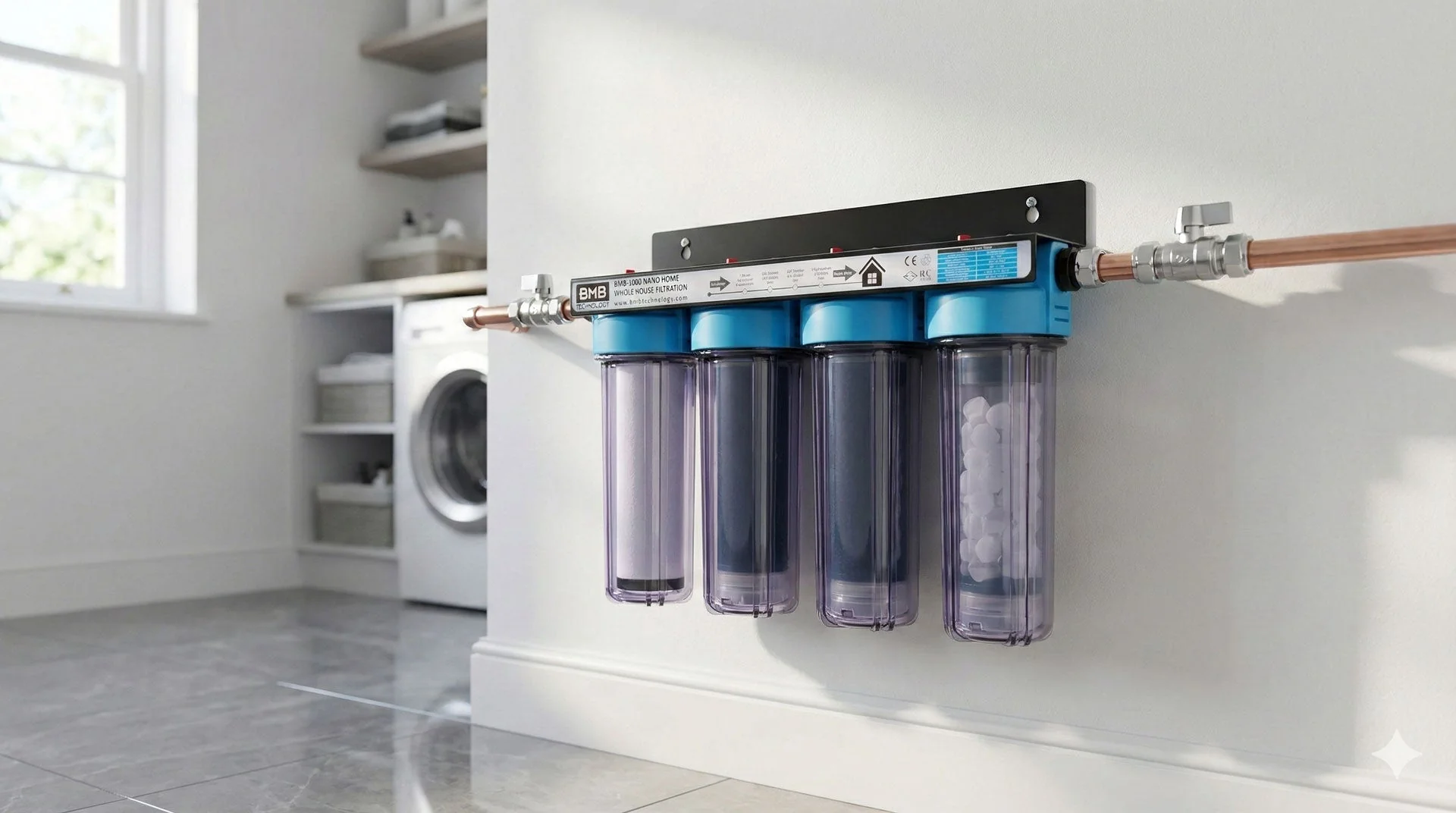
Instead of treating water at just one faucet, a whole-home setup treats water as it enters the property or at another central point in the plumbing system. Depending on the equipment, it may target sediment, chlorine, taste, odors or other specific concerns.
The important part is matching the filtration media to the problem.
A whole-home filter designed for sediment isn’t necessarily the right choice for dissolved contaminants, just as a carbon filter isn’t a universal answer to hard water.
Drinking Water and Household Water Aren’t Always the Same Conversation
There are good reasons to treat drinking water separately from the water used for showers, laundry and toilets.
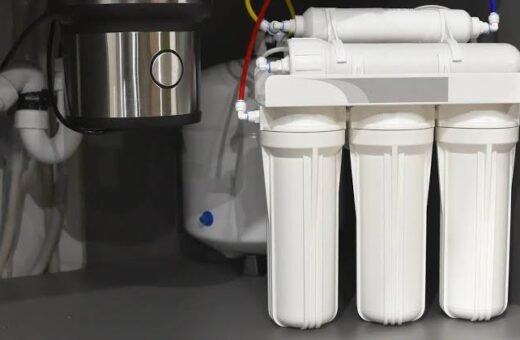
A reverse osmosis system, for example, may be appropriate for a kitchen drinking-water application when more extensive treatment is desired. A whole-home carbon filter might be used for taste and odor concerns throughout the property.
In some homes, both approaches make sense.
It comes down to what you want to accomplish and what the water test reveals.
There’s no prize for treating more water than necessary.
Don’t Forget About Iron
Iron can create some remarkably stubborn stains.
Dissolved iron may cause a metallic taste, while oxidized iron can leave orange or reddish marks around sinks, toilets and tubs.
But iron isn’t always present in exactly the same form. The treatment approach should take the water chemistry into account.
This is another situation where testing can prevent wasted money. Buying a generic “iron filter” without understanding the concentration and form of iron can lead to disappointing results.
The equipment isn’t necessarily bad. It may simply be the wrong equipment for that particular water.
Sediment Can Affect More Than Appearance
If you’ve ever replaced a clogged filter and wondered how so much material got into the plumbing, you already understand the issue.
Sediment can consist of sand, silt, rust particles or other physical material. In well systems, it can sometimes originate from groundwater or the well itself.
A sediment filter can protect downstream treatment equipment and plumbing fixtures, but cartridges have limits.
If a filter becomes clogged unusually quickly, replacing it over and over may not be the best solution. It may be worth investigating why the sediment load is so high.
Water Pressure Deserves a Look
Filtration systems can affect water pressure because water has to move through filter media and other components.
As a cartridge collects material, resistance can increase.
If you notice weaker flow from several fixtures, don’t automatically assume the household plumbing is failing. A clogged filter, malfunctioning valve or treatment-system restriction could be responsible.
Checking pressure before and after installation can also help establish a useful baseline.
Small measurements can make future troubleshooting much less mysterious.
Maintenance Is Where Good Systems Prove Themselves
Even excellent equipment won’t remain effective forever without maintenance.
Filter cartridges need replacement. Softener components need attention. Treatment media can eventually become exhausted. Reverse osmosis membranes have service lives, too.
Keep a simple record of maintenance dates.
It doesn’t have to be complicated. A note in your phone is enough.
If water taste changes, flow drops or staining returns after treatment, take those signs seriously. They may indicate that a filter needs replacement or that something else in the system has changed.
Don’t Assume More Filtration Is Always Better
There’s a natural tendency to think that more filters equal better water.
But every additional component introduces another maintenance requirement.
A well-designed system uses the right treatment stages for the water rather than piling on equipment simply because it sounds impressive.
This is particularly important when comparing systems with different numbers of stages or different types of media.
Ask what each stage does.
If nobody can explain why a particular component is necessary, that’s worth questioning.
Your Well or Plumbing May Be the Real Problem
Treatment equipment can improve water quality, but it can’t repair a damaged well casing or leaking plumbing.
If water changes suddenly, particularly after flooding or heavy rainfall, investigate the source.
A well inspection may be appropriate in some situations. Likewise, if only one faucet has unusual taste or odor, the fixture or nearby plumbing could be responsible.
Start broad, then narrow things down.
That approach often saves both time and money.
Think About the Long-Term Cost
The purchase price is only one part of owning a treatment system.
Consider replacement filters, salt or treatment media, electricity, water usage, professional servicing and eventual component replacement.
A cheaper system may cost more over several years if its cartridges are expensive or difficult to find.
On the other hand, buying the most expensive equipment available doesn’t guarantee better results.
Look for something that solves the actual problem and is realistic to maintain.
Good Water Treatment Begins With Good Information
There isn’t a single filtration system that makes sense for every home.
Some households may need a softener. Others may benefit from whole-home filtration. Some may only need point-of-use treatment for drinking water. Homes with private wells may need a combination of approaches depending on their test results.
The smartest place to begin is with information.
Notice changes. Test the water when appropriate. Understand what the results mean. Then choose treatment based on the actual conditions rather than a flashy product label.
Water doesn’t need to be complicated.
When the right system is properly sized, installed and maintained, it quietly does its job in the background. You shower without thinking about scale, wash dishes without fighting spots and fill a glass without wondering what’s hiding in it.
That’s the real measure of successful water treatment: not how impressive the equipment looks, but how naturally it fits into everyday life.