Water use can look very different from one business to another. An office might go through a modest amount each day, mostly for drinking, kitchens, restrooms, and cleaning. A restaurant can use water continuously from morning preparation through the dinner rush. A hotel, healthcare facility, or production site may have an entirely different level of demand.
That difference matters when water treatment equipment is being selected.
A system that performs beautifully in a quiet office may struggle in a property where several fixtures and appliances operate at the same time. And when treatment equipment can’t keep up, the consequences aren’t always obvious at first. Pressure may drop. Filters may need frequent replacement. Scale can begin appearing on equipment. Water quality may become inconsistent.
Commercial treatment works best when it’s designed around the real world, not an imaginary average day.
Begin With the Business, Not the Equipment
The first question shouldn’t be, “Which system should we buy?”
It should be, “How is water actually used here?”
Look at the number of employees, customers, fixtures, appliances, operating hours, and peak-use periods. A restaurant’s water demand might spike during food preparation and service. A hotel may see heavy use in the morning. A manufacturing operation could have continuous process-water requirements.
These patterns help determine the required flow rate and treatment capacity.
It’s a little like buying a delivery vehicle. You wouldn’t choose one based only on its appearance. You’d think about what it needs to carry.
Water treatment deserves the same practical thinking.
High-Usage Environments Need More Thought
Businesses operating in high-usage environments can put considerable demand on filtration and treatment equipment.
Commercial kitchens, hotels, laundries, healthcare facilities, food-processing operations, and busy public buildings may use large volumes of water every day.
That doesn’t automatically mean they need enormous treatment systems.
Instead, the equipment should be sized for both average and peak demand. If several fixtures operate simultaneously, the system should still provide appropriate flow without becoming a restriction.
Peak demand is particularly easy to overlook because everything may appear fine during a quiet inspection.
The real test often comes when everyone needs water at once.
Water Testing Provides the Foundation
Capacity isn’t the only concern.
The quality of the incoming water also determines what type of treatment is appropriate.
Testing can provide information about hardness, pH, iron, manganese, sediment, dissolved solids, and other characteristics depending on the test.
For a commercial property, that information can guide decisions about filtration, softening, reverse osmosis, deionization, or other technologies.
It can also prevent unnecessary purchases.
If the actual problem is hardness, installing equipment designed primarily for sediment may not solve it. If taste and odor are the concern, a completely different filtration approach may be more useful.
Good treatment starts with knowing what you’re treating.
A Customized System Can Make More Sense
Commercial buildings rarely fit neatly into a standard package.
A restaurant may need filtration for beverage equipment and additional treatment for dishwashing or other applications. A hotel may have different requirements for guest drinking water, laundry, and mechanical equipment.
A customized system allows treatment to be designed around those individual needs.
Customization doesn’t have to mean an overly complicated setup. Sometimes it’s simply a matter of choosing the right filter size, arranging components correctly, or separating treatment for different applications.
The goal is useful customization, not complexity for its own sake.
Different Equipment Has Different Jobs
Water treatment technologies are designed for particular purposes.
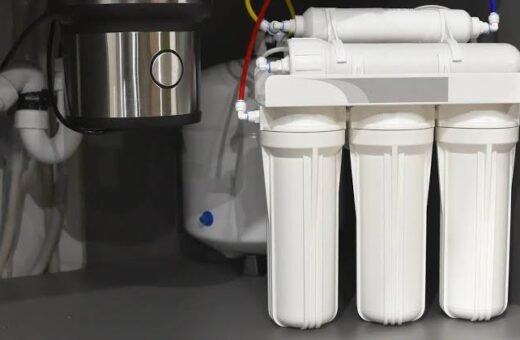
Sediment filters capture particles. Carbon filtration can reduce certain tastes and odors. Water softeners address hardness. Reverse osmosis can reduce many dissolved substances. Deionization is used in applications where very low ionic content is required.
No single system should be expected to do everything.
For commercial facilities, this distinction becomes even more important because water may be used for several different purposes.
A kitchen, for instance, may benefit from a different treatment setup than a laboratory or manufacturing process.
Protecting Expensive Equipment
Commercial appliances can be expensive to replace.
Coffee machines, ice makers, dishwashers, steam equipment, boilers, and other water-using machinery may operate for long hours. Water characteristics such as hardness and sediment can contribute to buildup or maintenance issues when they aren’t appropriately managed.
Suitable treatment can help create better operating conditions.
That doesn’t mean water treatment will prevent every equipment failure. Machines still age, components still wear out, and maintenance is still necessary.
But addressing known water-related issues is a sensible part of protecting equipment.
Installation Is a Design Decision
Installing commercial treatment equipment isn’t just a matter of connecting inlet and outlet pipes.
The installer needs to consider flow direction, pressure, drainage, electrical requirements where applicable, available space, shutoff valves, and future access.
Equipment should be installed where technicians can reach it without dismantling half the building.
This sounds obvious. Yet cramped installations happen all the time, usually because available space was considered after everything else had already been planned.
Think about maintenance before the system goes in.
Why Expert Maintenance Matters
A commercial treatment system can process a lot of water, which means its components can reach service limits faster than residential equipment.
Filters collect material. Membranes age. Softener systems require regeneration and appropriate salt levels. Pumps and valves may eventually need inspection.
That’s why expert installation and maintenance should be viewed as part of the overall treatment plan rather than an optional extra.
Routine service can help identify clogged filters, pressure issues, leaks, worn components, and other problems before they interrupt business operations.
A little preventive attention can be much cheaper than an emergency repair.
Keep Track of Filter Changes
Commercial operations are busy.
It’s surprisingly easy for maintenance tasks to disappear into the background while everyone focuses on customers, production, staffing, and daily deadlines.
Create a simple schedule.
Record filter replacement dates. Note service visits. Keep equipment manuals somewhere accessible. If several filters are involved, label them clearly.
You don’t need sophisticated software. A spreadsheet or shared calendar may be enough.
What matters is that someone is responsible for keeping the schedule current.
Don’t Ignore Changes in Pressure
Water pressure can be a useful early warning sign.
If flow suddenly becomes weaker, a filter may be clogged. But the cause could also be a valve problem, plumbing restriction, pump issue, or another component.
Look at the timing.
Did the change happen gradually? Did it occur immediately after a filter replacement? Does it affect the whole building or just one appliance?
Those clues can help identify the source without replacing equipment unnecessarily.
Consider Point-of-Use Treatment
Not every application requires the entire building to receive the same treatment.
A business may choose whole-building treatment for hardness while using point-of-use filtration for drinking water or specific beverage equipment.
This can be a practical way to avoid treating water unnecessarily.
The best design depends on how water is used and what each application requires.
Operating Costs Deserve Attention
The equipment price is only the beginning.
Businesses should consider replacement filters, membranes, salt, electricity, wastewater, service visits, and eventual component replacement.
A system that costs less initially may become expensive if filters have short service lives or replacement parts are difficult to obtain.
On the other hand, paying more upfront isn’t automatically a guarantee of better value.
Look at the full operating picture.
Plan for Future Growth
Businesses change.
A small restaurant can become busier. An office may add employees. A hotel may expand. Production requirements can increase.
If water demand is likely to grow, consider whether the treatment system can accommodate that change.
It may be possible to design with additional capacity or flexibility from the beginning. That’s usually easier than discovering later that the system is undersized and needs to be replaced.
Training Staff Can Prevent Small Problems
Employees don’t need to understand water chemistry.
They should know what normal equipment operation looks like.
If a filter alarm appears, a leak develops, or water suddenly tastes different, staff should have a clear process for reporting it.
Small issues are much easier to resolve when they’re noticed early.
Ignoring an unusual sound or weak flow because “someone else probably knows about it” is how minor problems sometimes become expensive ones.
Keep the System Practical
There’s a temptation to add technology simply because it exists.
More filters. More stages. More tanks. More features.
But every additional component brings another maintenance requirement.
The best commercial treatment system is usually the one that addresses the actual water-quality concerns while fitting the building’s operational needs.
Simple is not a weakness when simple works.
Reliable Treatment Supports Reliable Business
Water isn’t usually the reason customers walk through a business’s doors. Yet it can influence what happens after they arrive.
It affects beverages, food preparation, cleaning, appliances, ice, employee facilities, and many behind-the-scenes processes.
When water treatment is correctly planned, those tasks can become more predictable.
Start with testing. Understand water demand. Account for peak usage. Select equipment for the actual application. Install it thoughtfully, and maintain it consistently.
That’s the less glamorous side of commercial water treatment, but it’s also the part that matters most.
A good system shouldn’t demand attention every day. It should quietly keep up with the business, protect the equipment that depends on it, and provide reliable water when people need it.
When that happens, the treatment system becomes what every good piece of infrastructure should be: something working quietly in the background while the business gets on with the job.